Constructing a Legacy: Year Five
Recognized for the fifth year in a row, Hines College architecture students turn ideas into impactful design solutions addressing real-world challenges
by Nicholas Nguyen • March 30, 2026
above: The Floor plan for The Mead Arc by SofíA LÓPEZ PéREZ
In spring 2026, students from the University of Houston Gerald D. Hines College of Architecture and Design once again earned top recognition at the AIA Fort Worth Student Design Awards, marking the fifth consecutive year the College has been honored in the statewide competition. With submissions from all eight accredited architecture schools across Texas, the awards highlight emerging talent judged by leading practitioners across the region. This year’s jury — led by Amanda Schulte, AIA (Bennett Partners), Kris Calvert, AIA (Urban Bobcats), and Bentley Tibbs, AIA (Bentley Tibbs Architect) — selected projects that demonstrate design excellence, innovation, and a strong engagement with contemporary challenges.
Hines College students stood out among their peers, receiving one Honor Award, accompanied by a $500 scholarship, and two Merit Awards when they attended the ceremony at the Modern Art Museum of Fort Worth on March 7. The continued recognition reflects not only the strength of individual student work, but also the College’s emphasis on design as a critical, research-driven, and socially responsive practice.
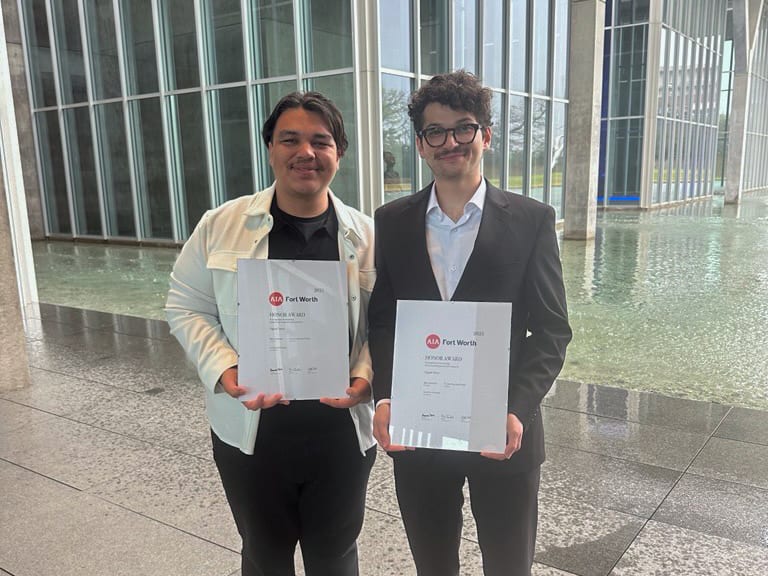
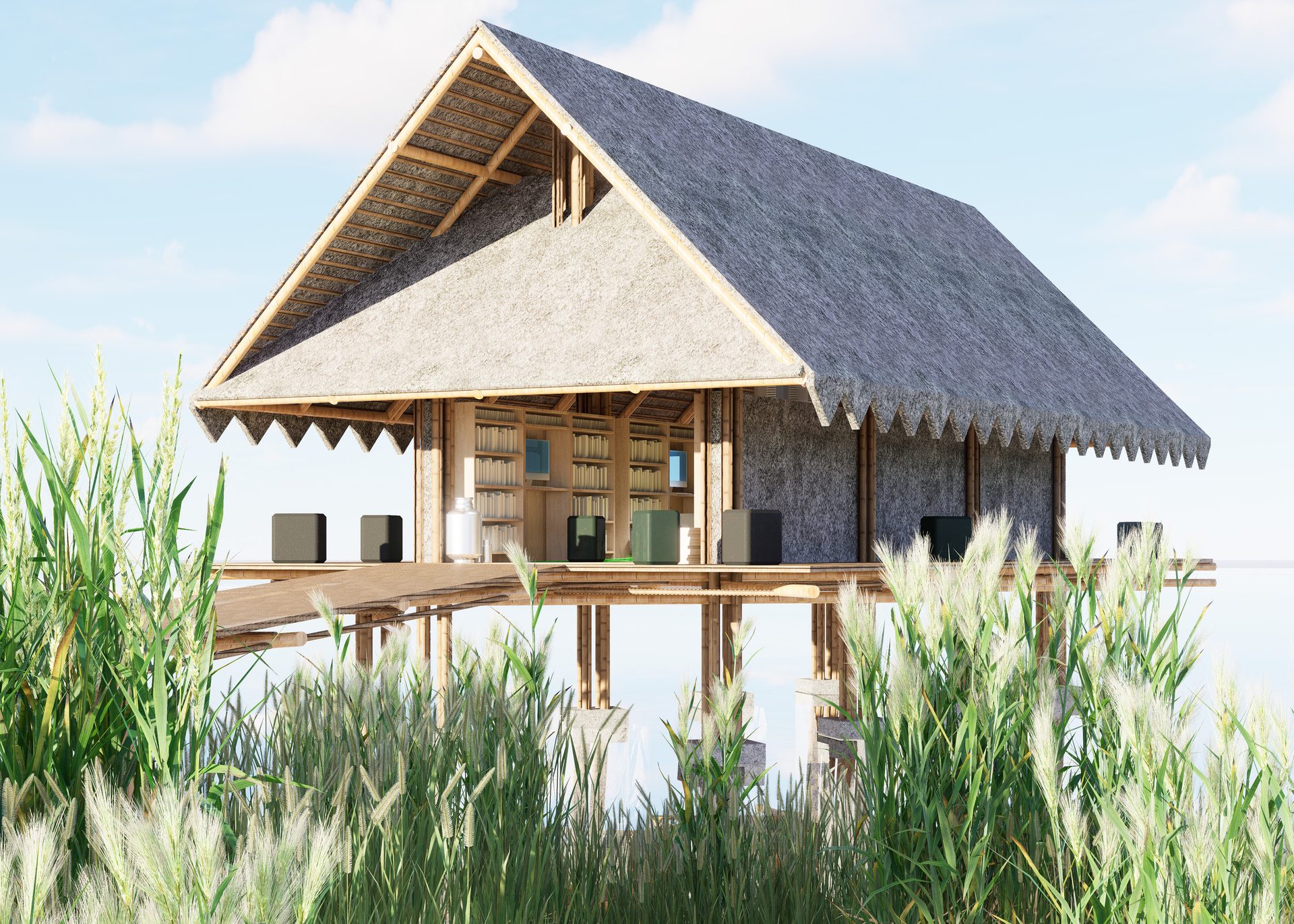
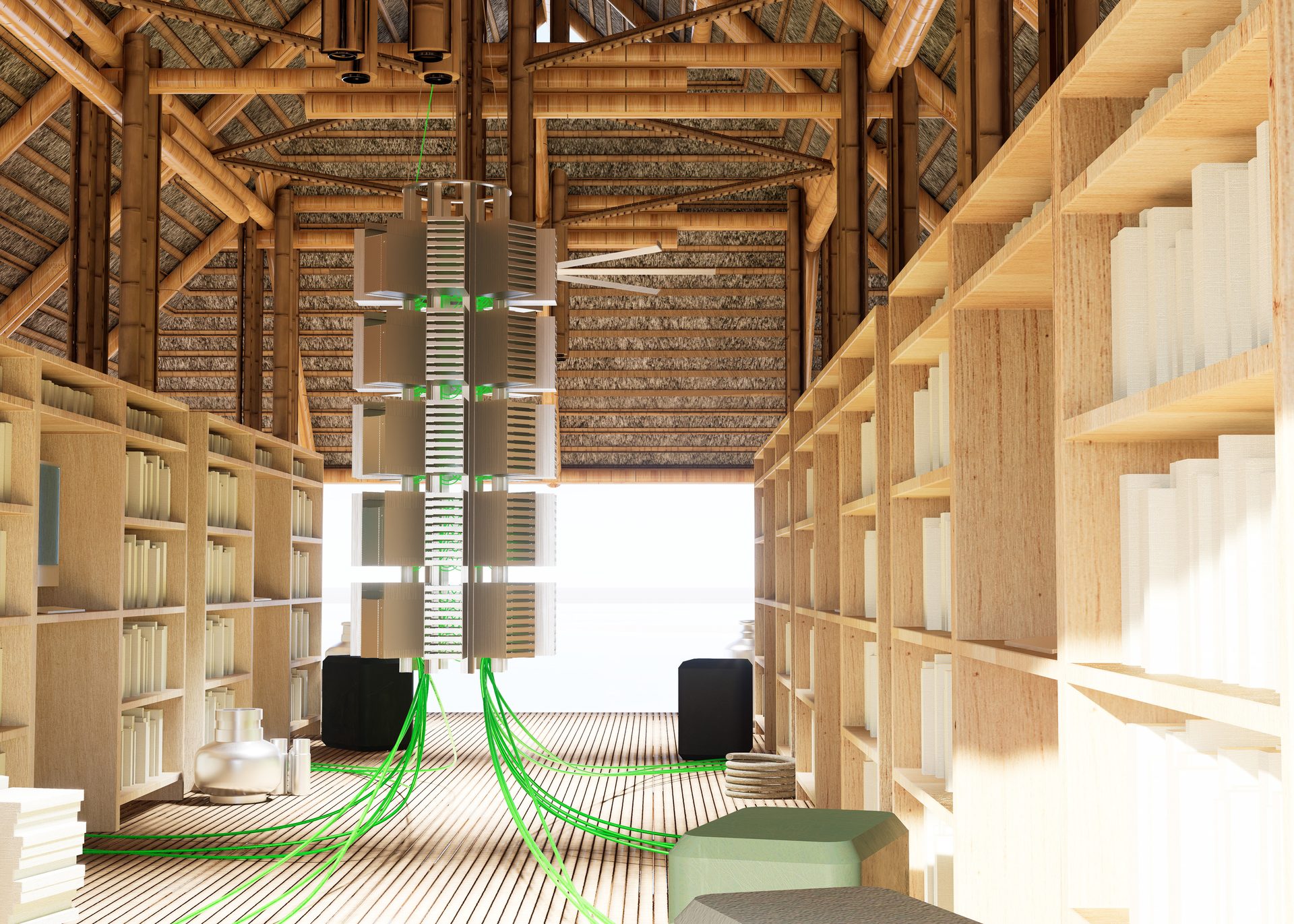
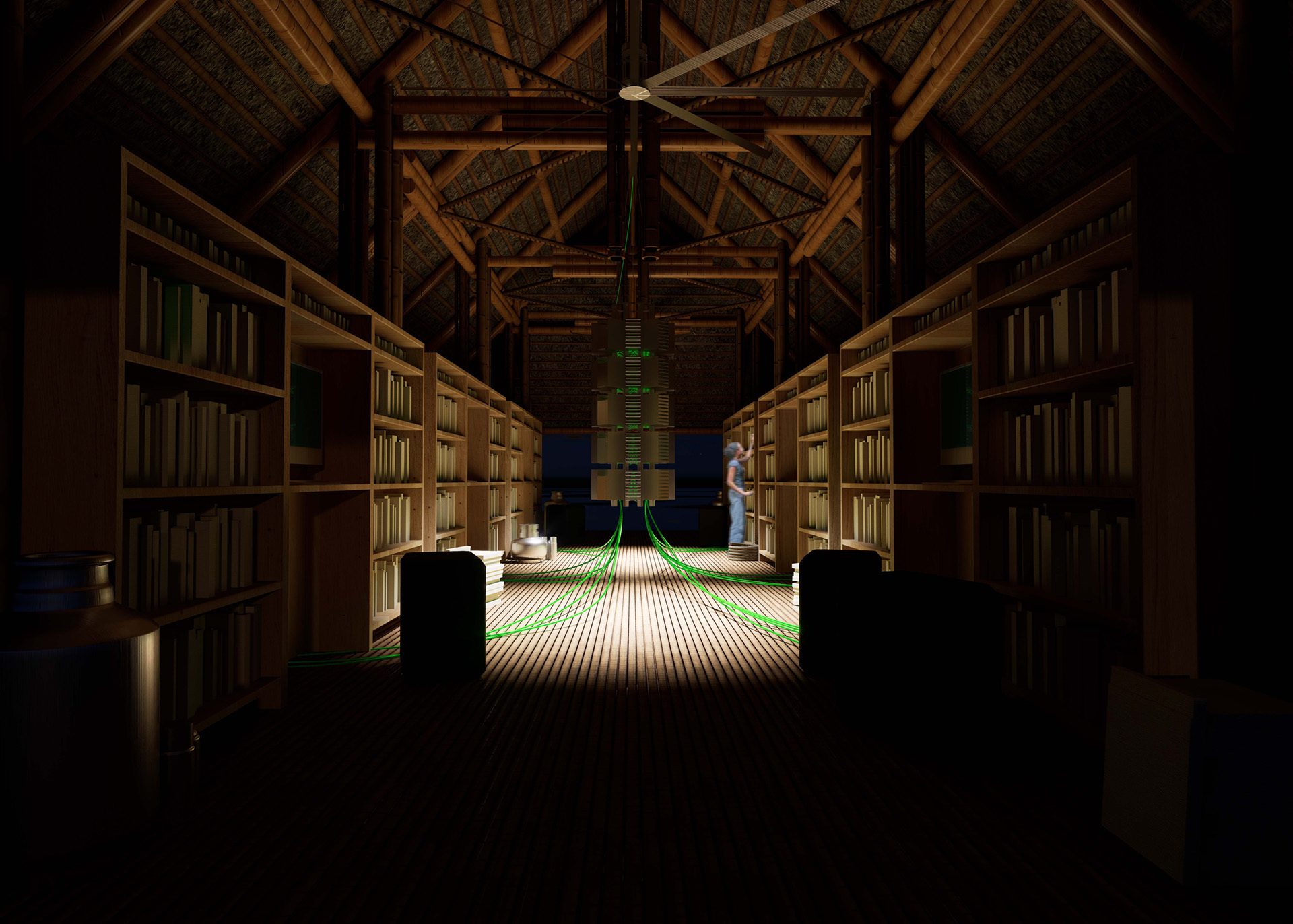
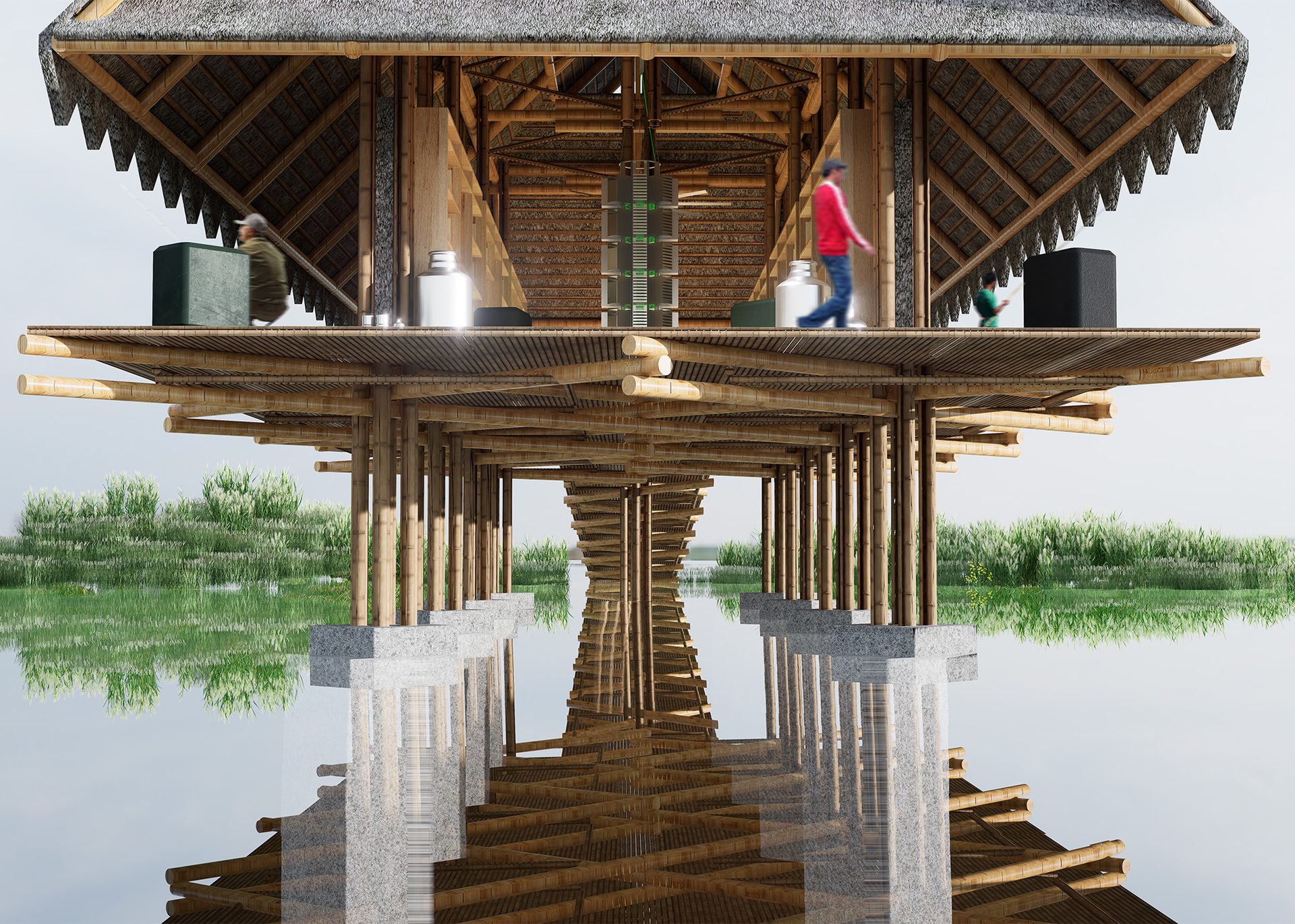
above: Norverto Diaz and Marco Inofuentes at the awards ceremony in Fort Worth; images from their project, Digital Tattoo
Digital Tattoo
Honor Award
Designers: Marco Inofuentes and Norverto Diaz
Digital Tattoo addresses educational inequity in Molocaboc, a remote fishing island in the Philippines, by proposing a resilient hybrid library that combines cultural expression with technological infrastructure. Drawing inspiration from traditional tribal tattoo patterns, the project embeds these motifs into the architectural and structural logic of the building. The design incorporates both high-tech and low-tech strategies, including a durable server system inspired by airplane black boxes, capable of protecting critical data in extreme conditions. Constructed from locally sourced bamboo and integrated with renewable energy systems, the library provides both physical books and digital access, ensuring long-term educational opportunities while preserving cultural identity.
Juror’s Comments:
“A highly restrained project beautifully assimilating an indigenous culture with technological capabilities of the outside world. The clarity of both is kept clear while their integration seems complementary. Both the existing culture and the outside world are brought together, maintaining their identities and creating something new and beneficial.” —Bentely Tibbs, AIA
“The main idea of the library and the server as the main source of connection and education in this community is very clearly communicated in concise drawings and renderings. Though very straightforward in plan, the structure and roof forms depict a thoughtful response to both the climate and vernacular architecture on the island.” —Amanda Schulte, AIA
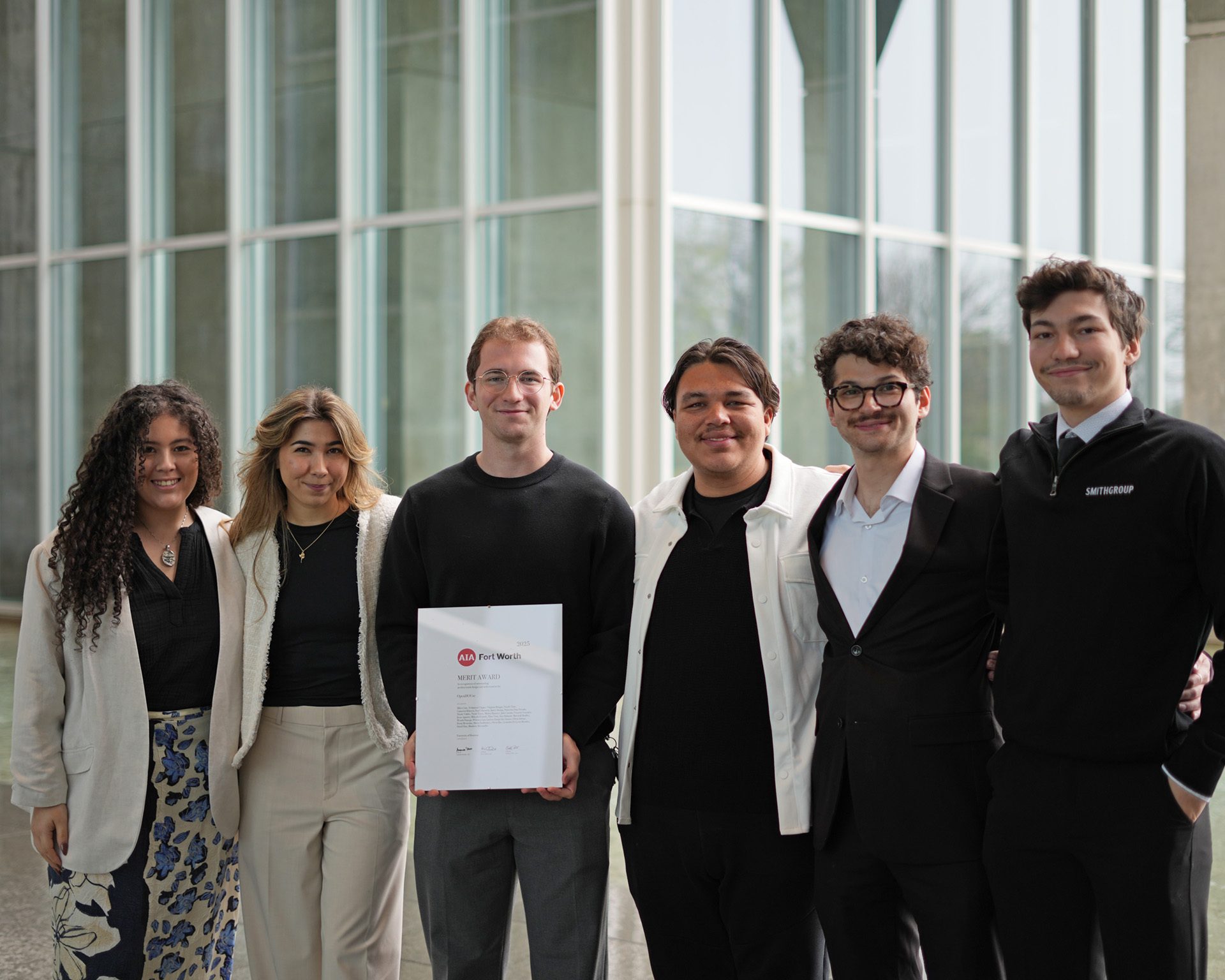
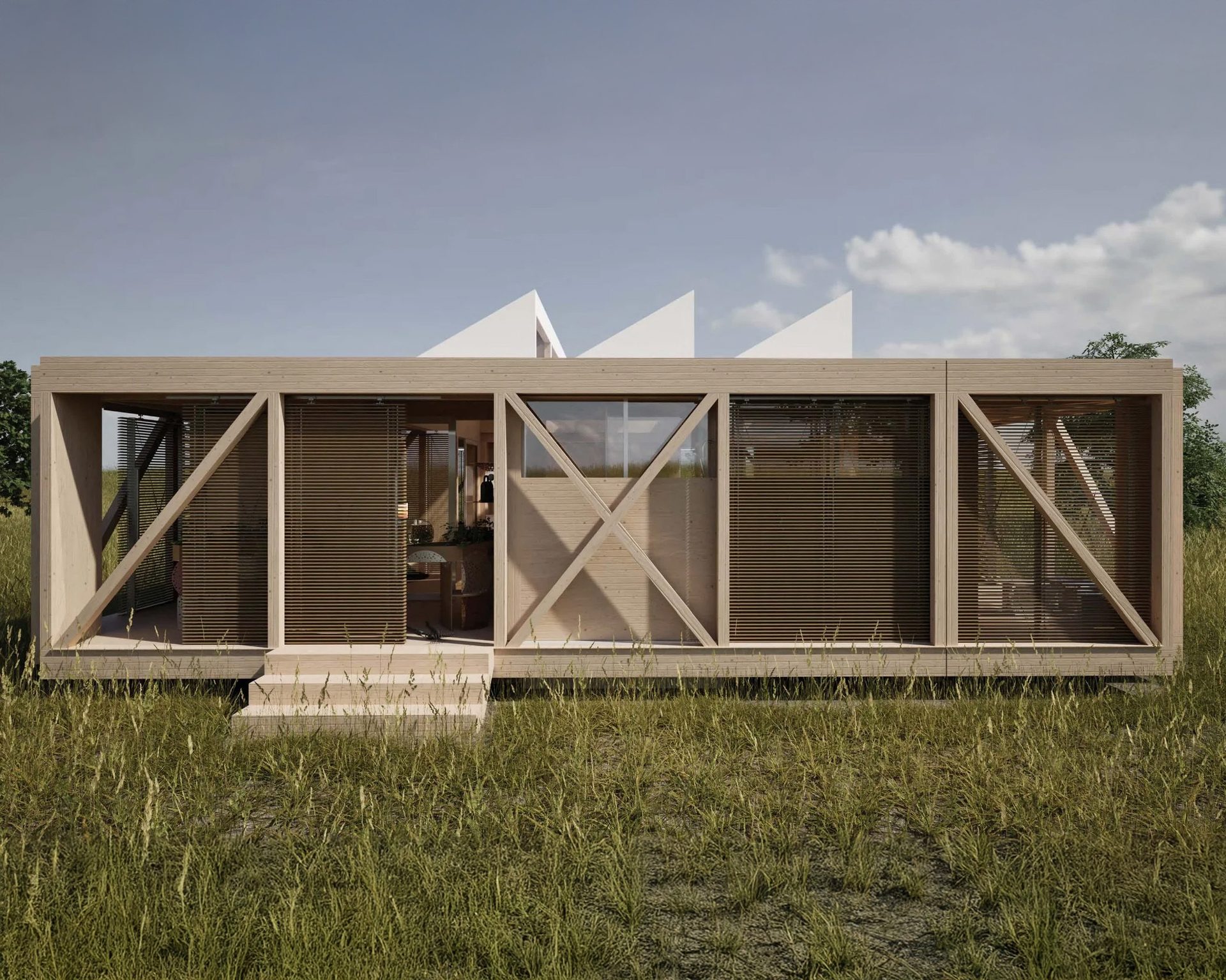
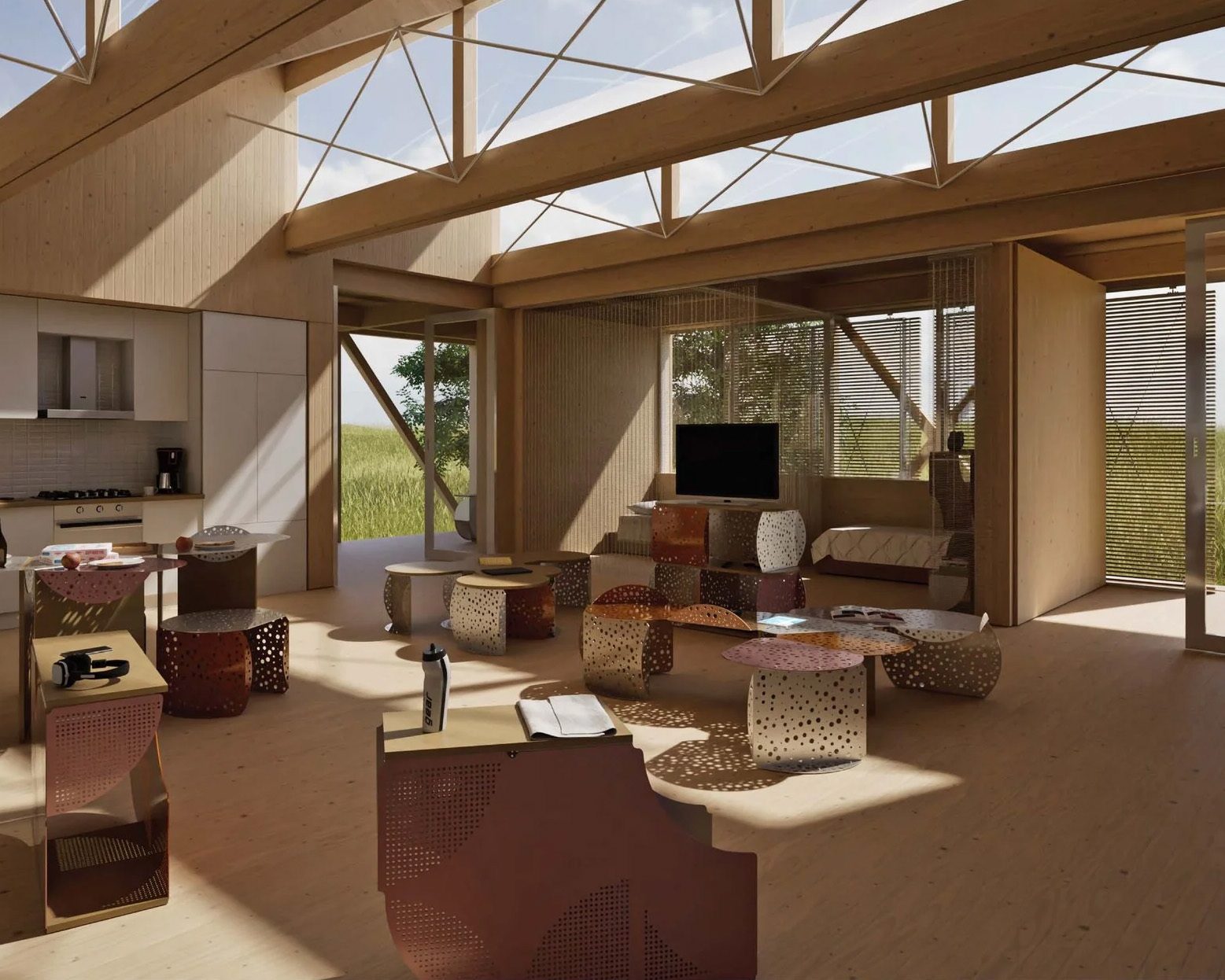
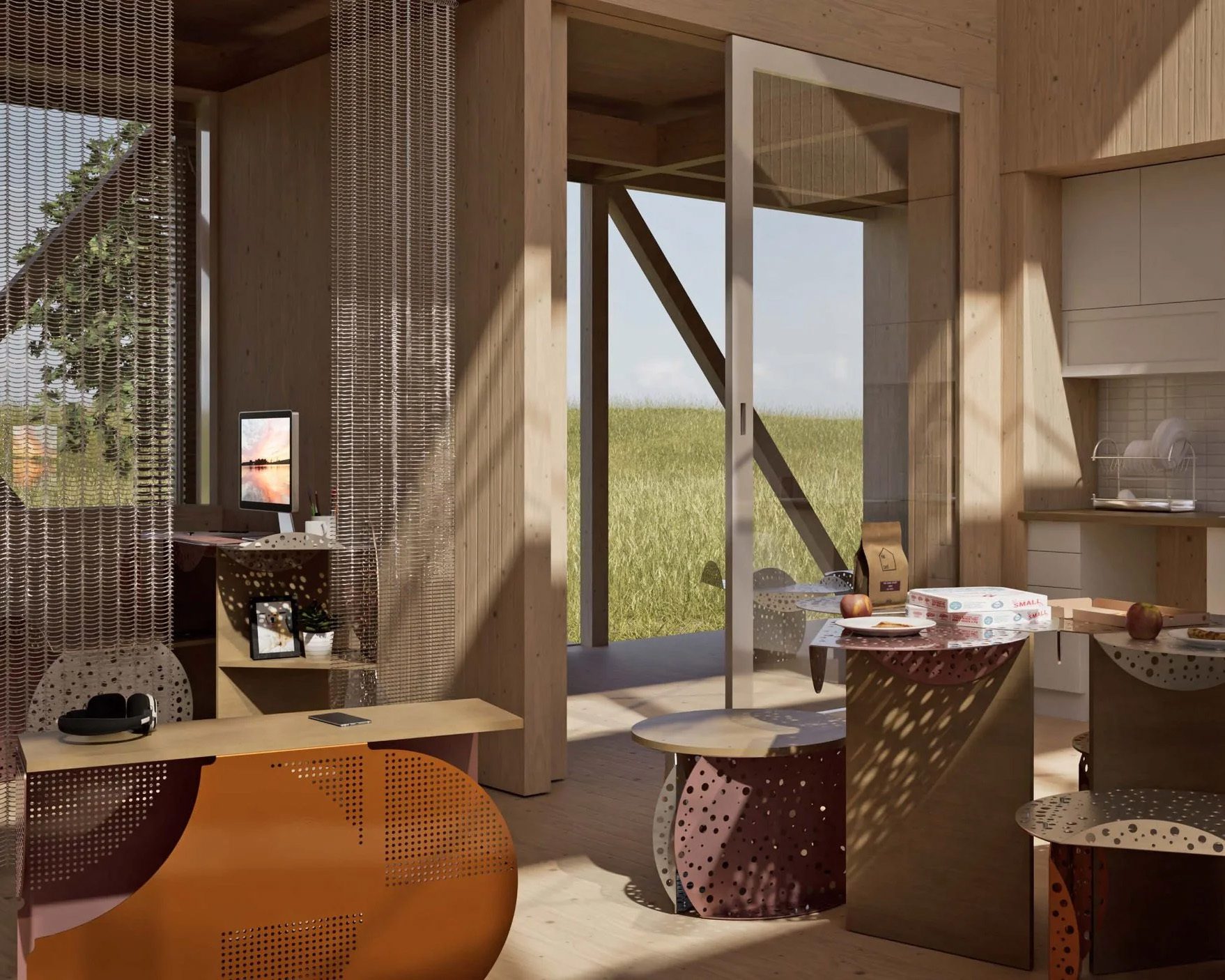
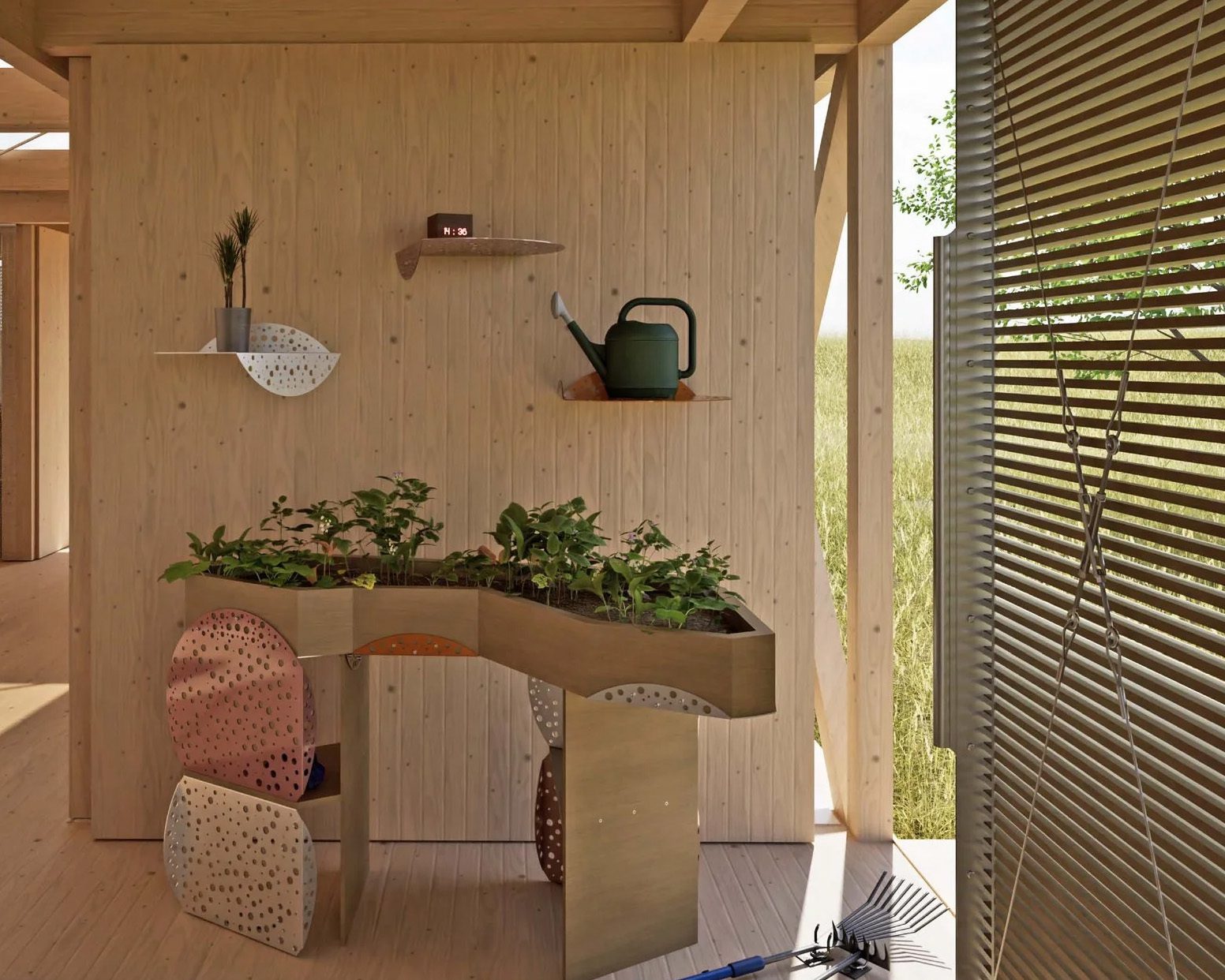
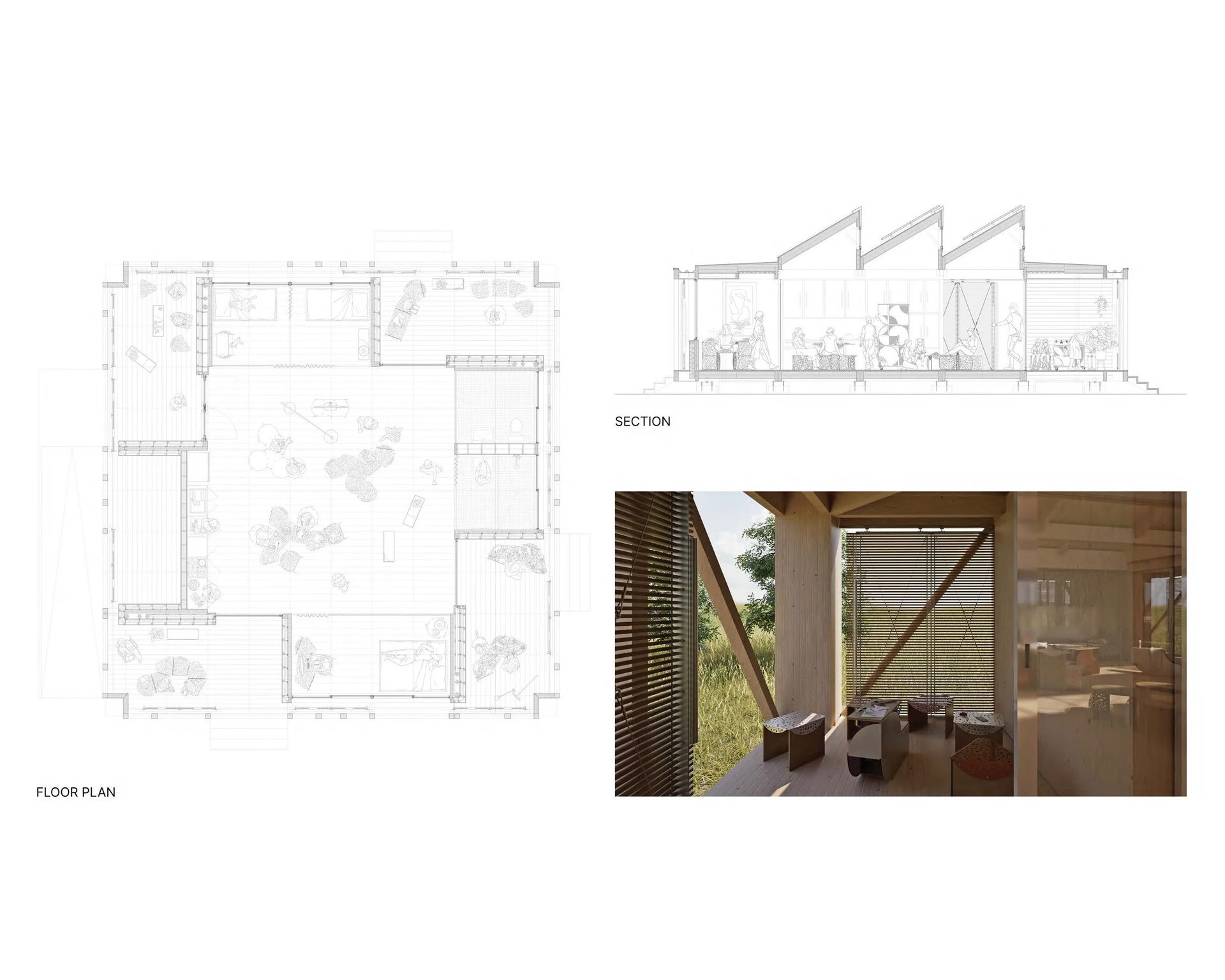
above: Olivia Blas, Olivia Salinas, James Strang, Norverto Diaz, Marco Inofuentes, and Matthew Alessandro representing the OpenHOUSE team; images from the studio's project
OpenHOUse
Merit Award
Designers: Jesus Aguirre, Matthew Alessandro, Alex Baltazar, Marshall Bradley, Virginia Briagas, Olivia Blas, Miles Cary, Paul Chavarria, Yetlanetzi Chijate, Lisandro Deleon, Noroverto Diaz, Larissa Dos Santos, Victoria Gonzalez, Jade Guerra, David Han, Marco Inofuentes, Cameron Klassen, Whitney Lau, Elena Mexicano, Wendy Pantoja, Marley Ramirez, Olivia Salinas, James Strang, Nicole Tran, Thuc Tran, Trent Troxey, Nicole Valdes, Mikayla Zientek
OpenHOUse reimagines the contemporary home as a shared, sustainable, and adaptable environment. The project utilizes modular prefabricated timber construction alongside operable exterior screens, photovoltaic systems, and rainwater collection to minimize both operational and embodied carbon. Drawing inspiration from vernacular precedents such as the southeastern United States dogtrot house and Persian wind towers, the design integrates passive ventilation strategies to create comfortable microclimates. Beyond the architectural proposal, the project includes full-scale interior and exterior prototypes, exploring elements such as sliding doors, curtains, and furniture systems that reinforce flexibility and environmental responsiveness.
Juror’s Comments:
“The project goes to great lengths to combine computer technology, machine, and handcrafted construction as design methods to explore the idea of flexible use. The execution of the idea seems to be important here. This is not just paper architecture. It shows that flexible space does not need to be benign space. The entirety of the built environment; walls, ceilings, furniture, and accessories are expressed as adaptable, but meaningful.” —B.T.
“This feels like a complete project - from the idea to the execution of the building forms, down to the small details - beautifully arranged.” —Kris Calvert, AIA
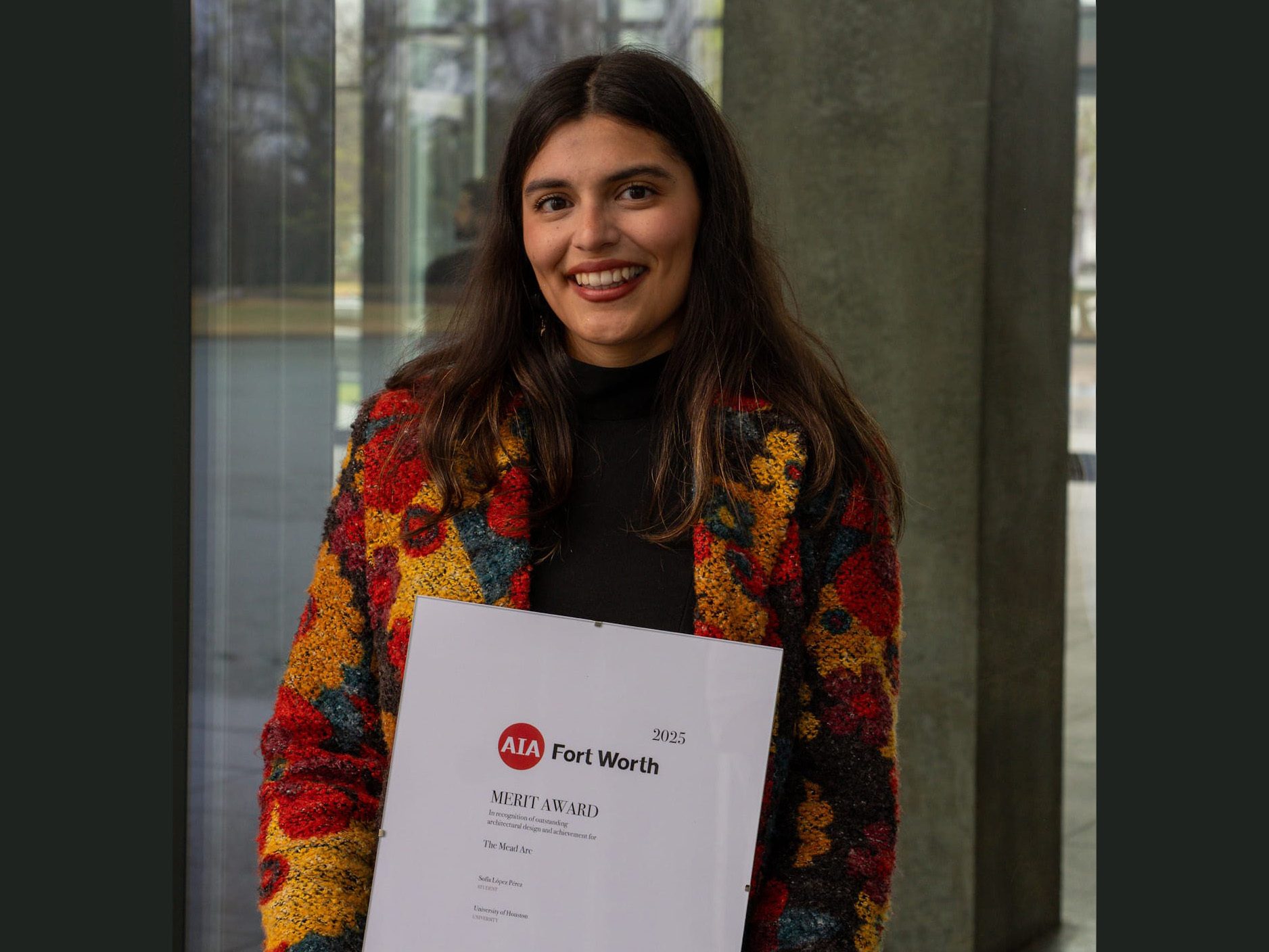
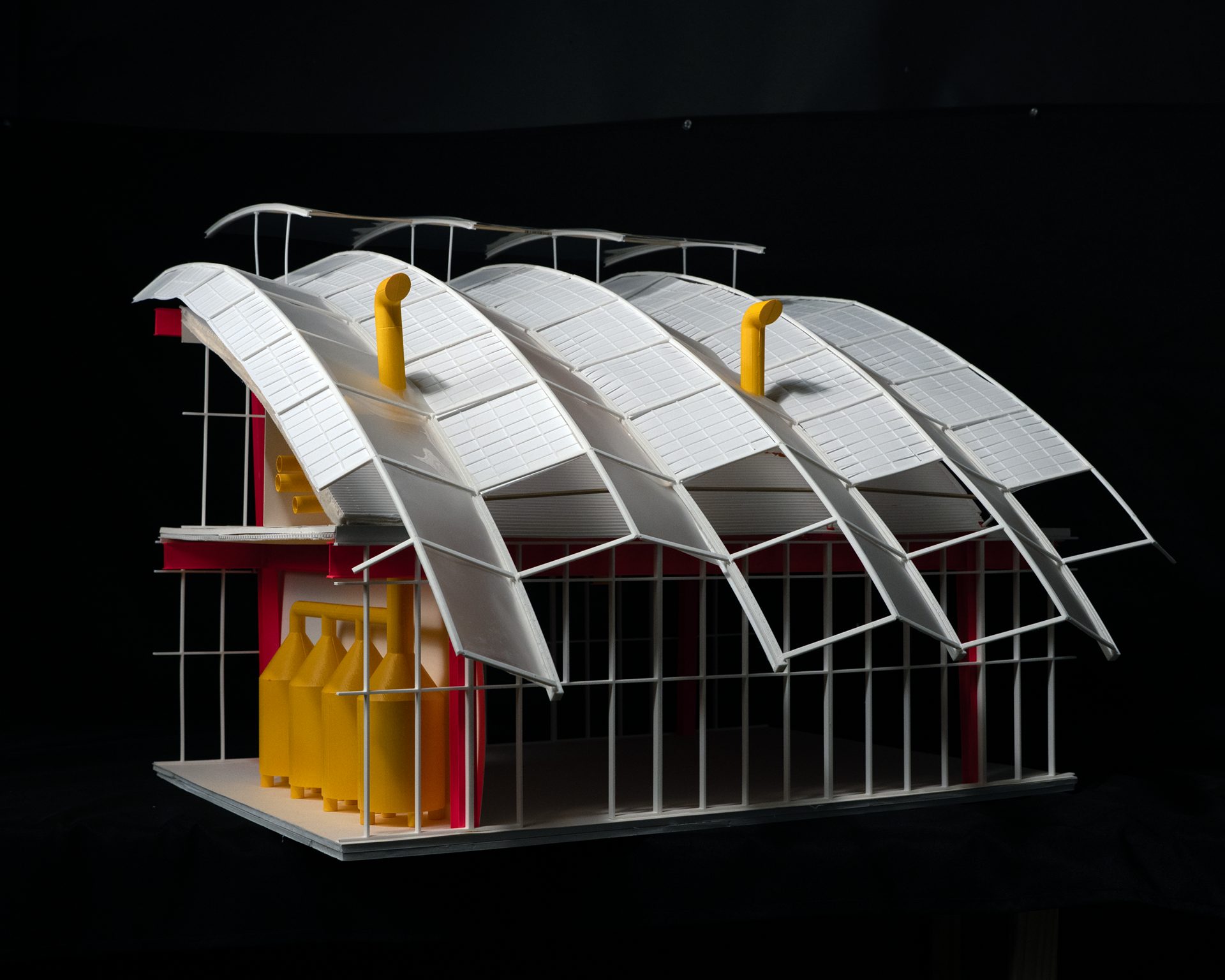
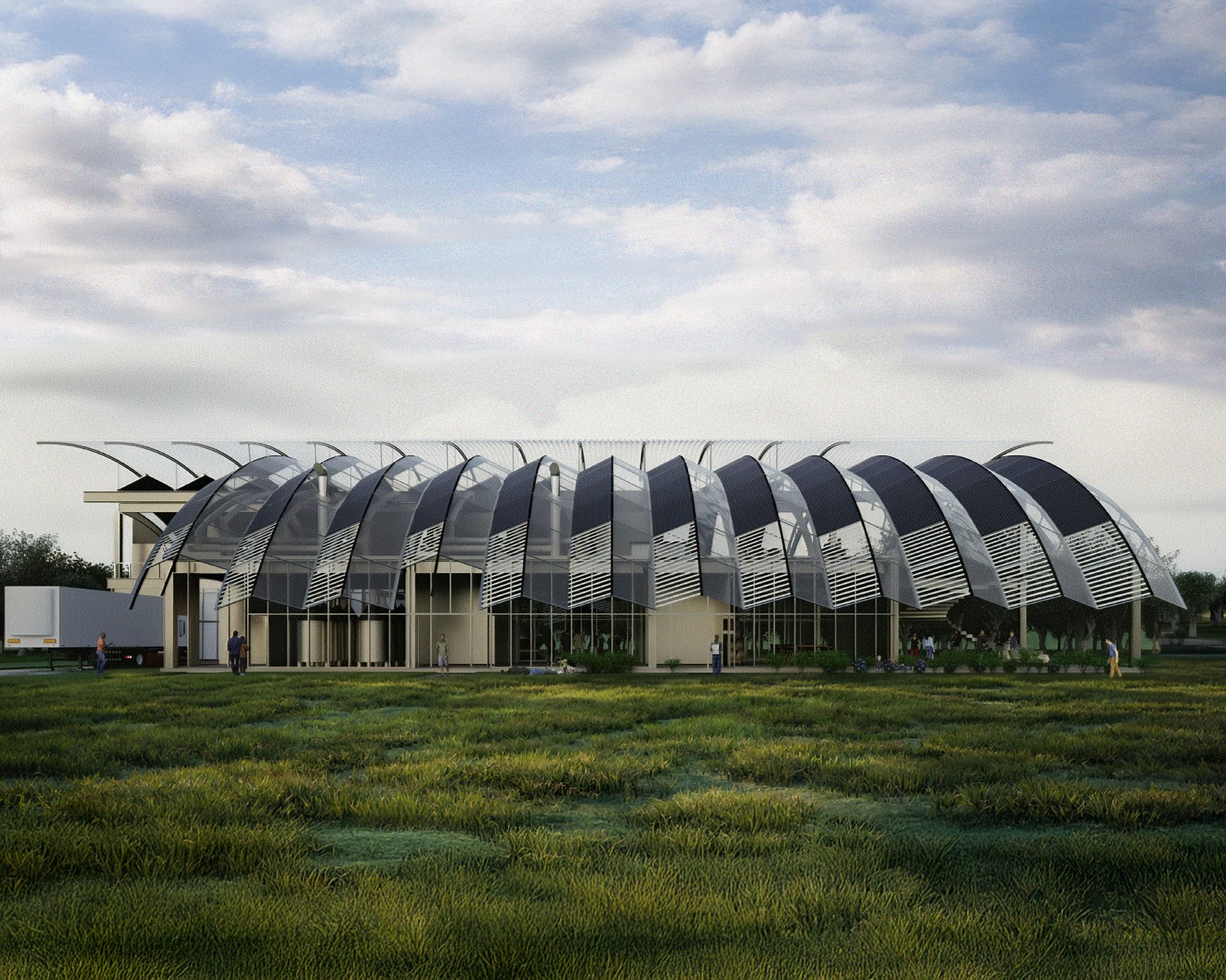
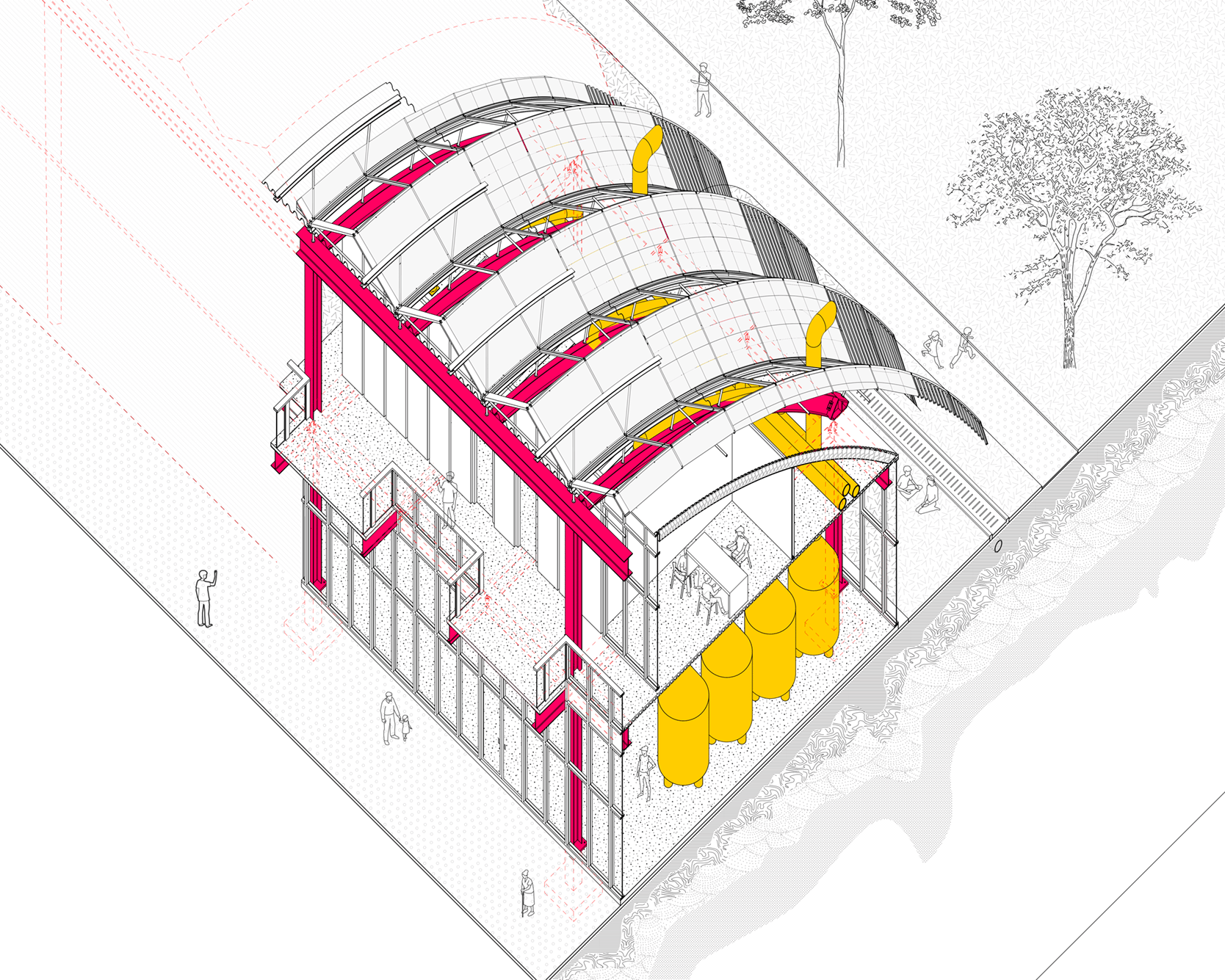
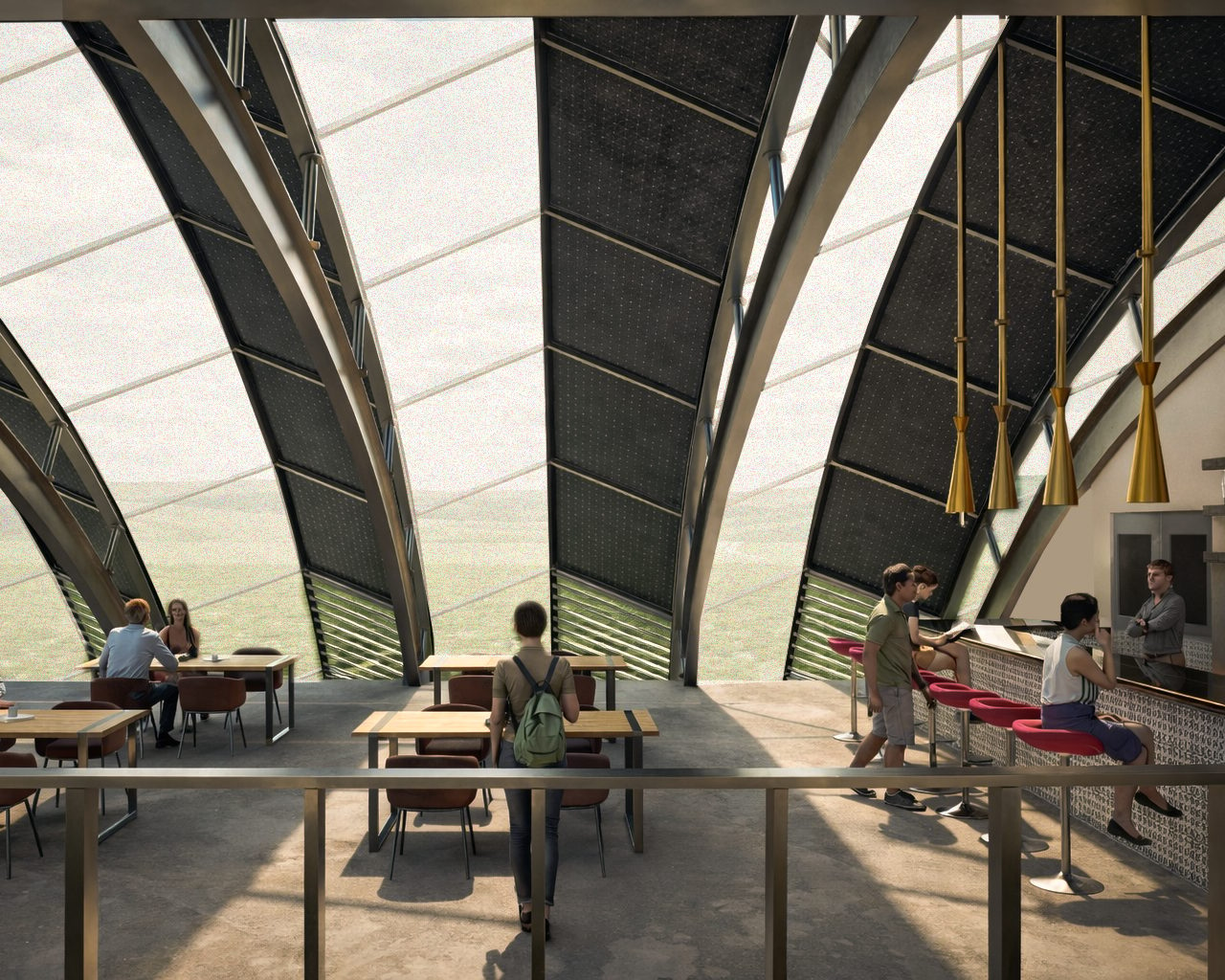
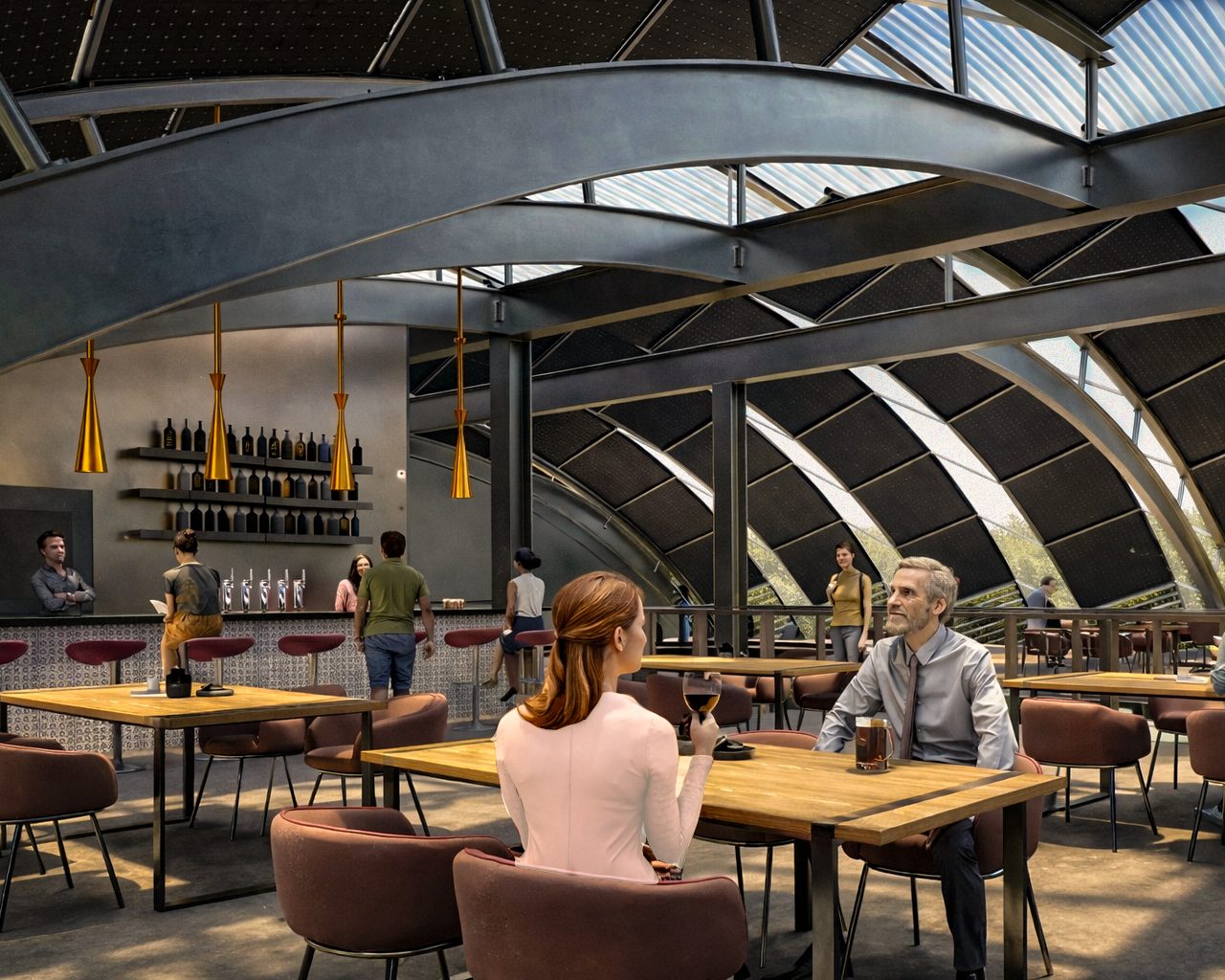
above: Sofía López Pérez with her award; images from her project
The Mead Arc
Merit Award
Designer: Sofía López Pérez
The Mead Arc proposes a meadery embedded within a self-sustaining village centered on apiculture. Conceived as part of a closed-loop system, the village produces its own food, energy, and waste management infrastructure, with the meadery transforming locally harvested honey into an ancient, fermented beverage. The project merges industrial production with public engagement through spaces for tours, tastings, and community interaction. Its defining architectural feature is a multi-layered modular roof system that regulates light, harvests water, generates energy, and mitigates heat. In response to declining bee populations, the project positions architecture as a tool for ecological awareness, connecting craft, sustainability, and community life.
Juror’s Comments:
“This presentation did a lovely job of showing all the aspects that were thought through in the design process – daylight, structure, mechanical systems, envelope, public access, etc. The shift of the module in plan creates an interesting take on a more rudimentary and pastoral form.” —A.S.
“Well thought-out project. I especially appreciated the complex yet artful roof forms addressing natural light, shade, rainwater, and solar energy.” —K.C.
The continued success of Hines College students at the AIA Fort Worth Student Design Awards underscores the College’s commitment to preparing designers who are not only technically skilled but also critically engaged and socially conscious. As these students move forward into professional practice, their work signals a future of architecture that is adaptive, collaborative, and deeply attuned to the complexities of the world it serves.