From Studio to Systems
Hines College alum awarded a Steve Jobs Archive Fellowship, charting future in design computation and fabrication technologies
by Nicholas Nguyen • January 14, 2026
Some students discover their path; Rodrigo Gallardo (B.Arch. ’23) built his. What began as a fascination with design at the University of Houston Gerald D. Hines College of Architecture and Design has evolved into a pursuit at the cutting edge of human–computer interaction. That journey has now earned the young alum a Steve Jobs Archive Fellowship, a highly selective, yearlong program supporting young creators working where technology meets the liberal arts. Fellows receive a stipend, individualized mentorship, and the support of a national community driven by curiosity, invention, and the desire to improve the world.
For Gallardo, the honor arrives at a pivotal moment in his academic and creative trajectory. “I am incredibly grateful for the fellowship. It is both fuel and validation for my work,” he says. “Being part of a network of people so deeply committed to making the world a better place is humbling and motivating.”
The recognition comes as he pursues dual master’s degrees at MIT in Computational Design and Electrical Engineering & Computer Science, extending the line of inquiry he began at the Hines College: how design, technology, and human experience shape one another, as well as how expanding the tools of design can expand its impact.
Defining Moments at UH
Gallardo traces his research identity back to the Hines College. “Mentorship from my professors, especially during my thesis, was instrumental in shaping my research direction,” he says.
Faculty encouraged him to challenge assumptions, think beyond disciplinary boundaries, and reconsider what architecture could mean in a rapidly shifting technological landscape. The turning point came when professors urged him to explore design outside of what is physically built. Ultimately, his perspective shifted, and he now views architecture as a means to engage with the world and shape how people experience it.
“Around that same time, I began experimenting with augmented reality as a tool to guide fabrication. I realized we do not just have to design what is built, but we can also design the tools allowing things to be built,” he explains.
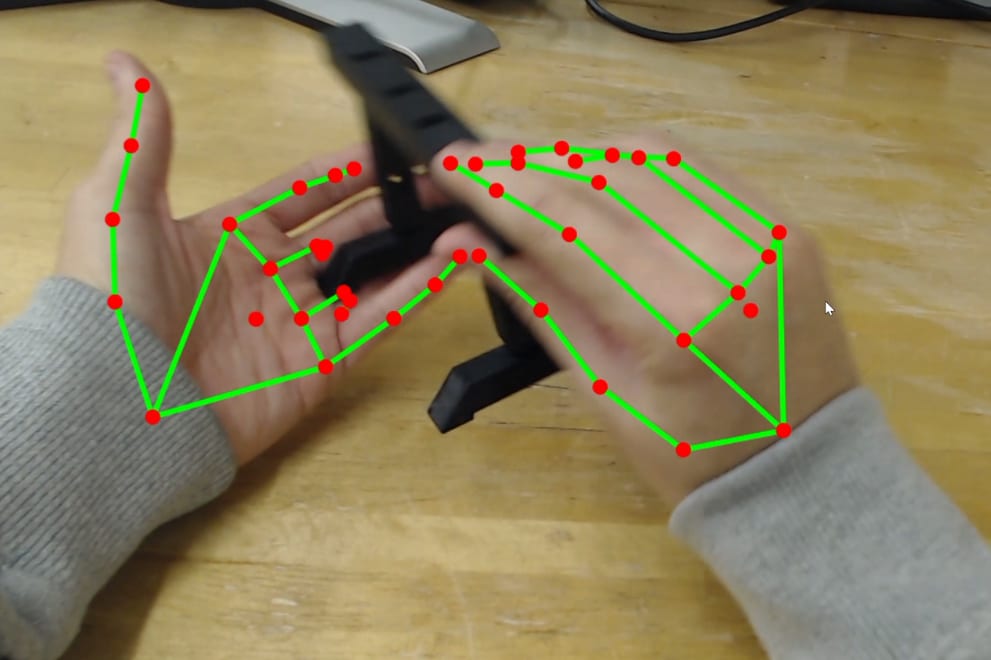
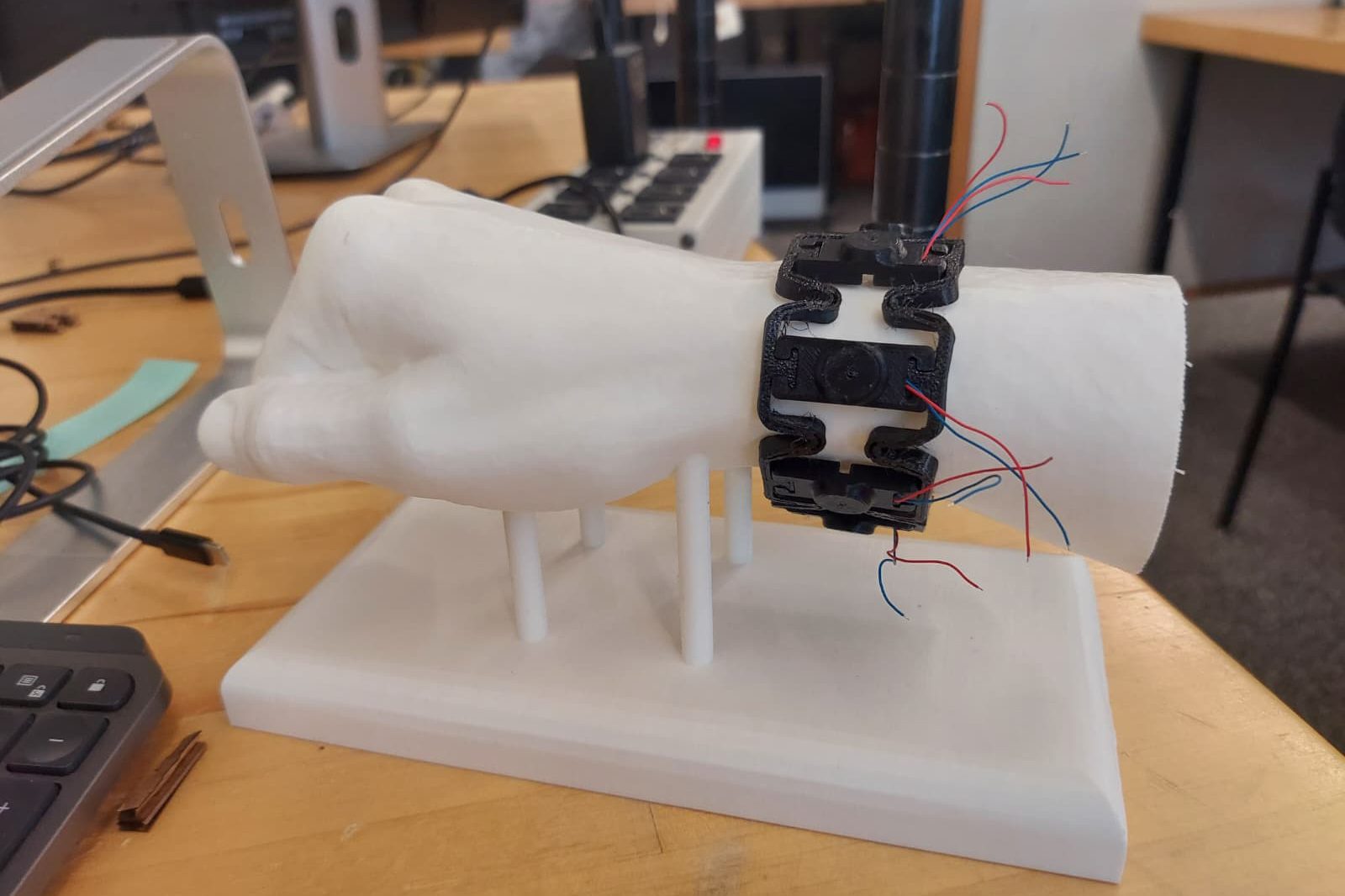
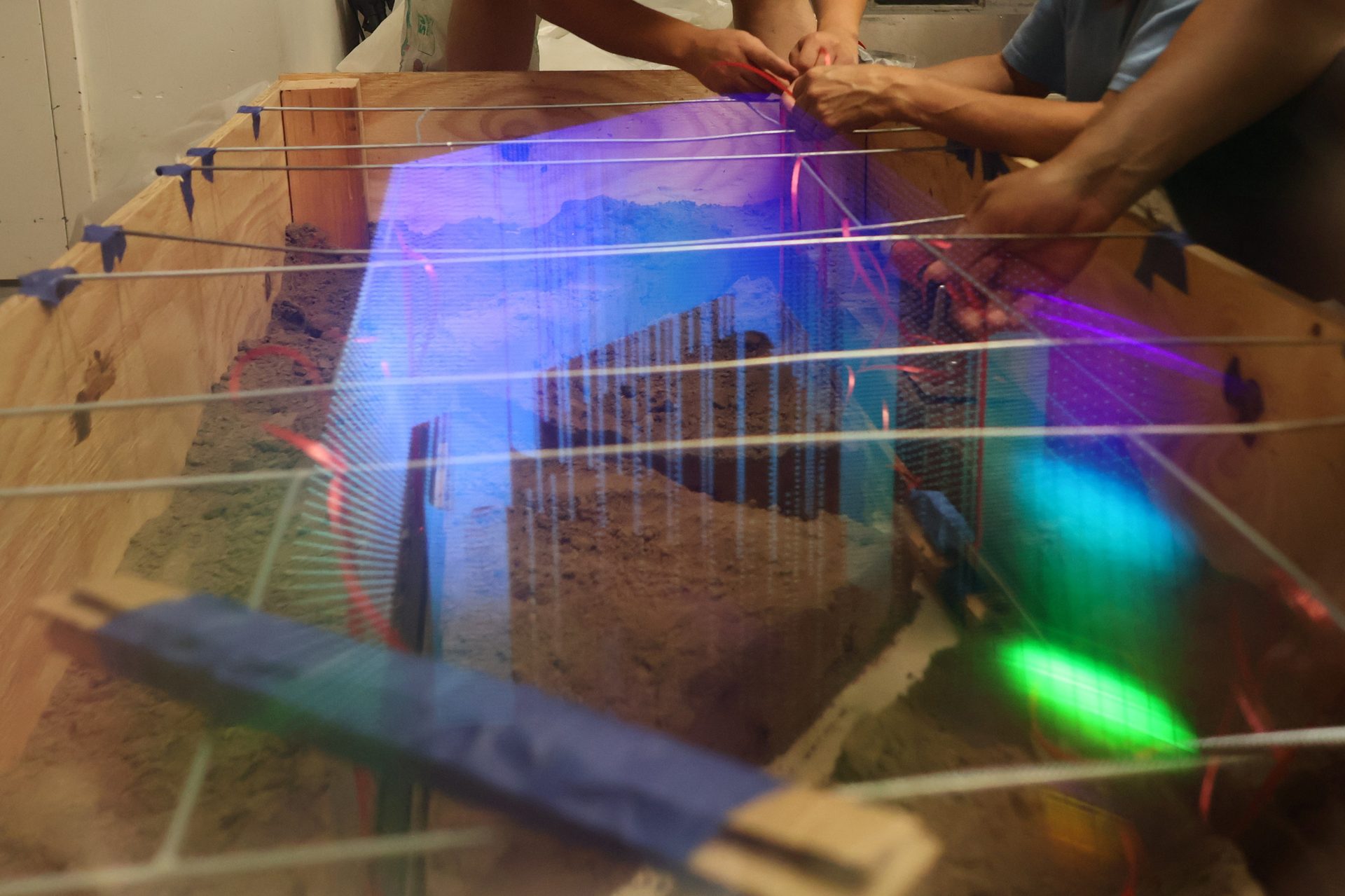
above: The First two images depict progress from Gallardo’s thesis project, “VisuoHaptic System,” where hand movements are tracked and haptic feedback is given through a device; An example of augmented reality assisting with fabrication
Expanding What Design Can Be
This mindset now drives his research at MIT, where he focuses on human–computer interaction through visual and haptic technologies. Gallardo is developing computational systems using sensory feedback to support learning, collaboration, and new modes of fabrication. “The broader goal is to design interfaces expanding how people can create, understand, and shape their environments,” he says.
His work imagines design as an evolving language. It becomes a medium for shaping experiences and mediating how people interact with tools, information, and one another.
For Gallardo, the fellowship is more than an accolade; it is an environment where big questions are encouraged, resources are shared, and the work feels connected to a greater purpose. “Surrounded by individuals doing such meaningful work, I feel inspired to keep growing and contributing in my own way,” he says.
The year ahead will allow him to continue developing his systems, engage with mentors who work across disciplines, and deepen his approach to designing technologies that expand creative ability.
Rodrigo’s Operating Manual for Students
You are a designer — no matter your tools.
“Whether you’re sketching, coding, or building something, you’re shaping how the world works.”
Break out of studio silos and expand your interests.
“Attend events outside your department. Collaborate with Engineering or Art. Intersections spark innovation.”
Continue your studies and explore the unfamiliar.
“Don’t be afraid to enter a new field or combine interests that don’t immediately fit together.”
Set a path for the next generation and pay it forward.
“Share what you learn. Help others find their voice. Keep the door open for those who come next.”
Get the Scoop
This story was first published in the fall 2025 issue of DIMENSION Magazine.
Read the magazine.