Holding Ground in a Changing Climate
Award-winning Hines College student project applies ecological research to rethink how infrastructure can respond to flooding and erosion
by Nicholas Nguyen • April 29, 2026
ABOVE: An image from the Aftercast project by Gustavo Gonzalez Contreras
For Gustavo Gonzalez Contreras, a University of Houston Gerald D. Hines College of Architecture and Design student, design begins with observation. Living in Houston, he has witnessed firsthand how flooding, erosion, and shifting ground conditions shape the city’s landscape. Those experiences became the foundation for Aftercast, a project that challenges conventional ideas about site furniture and positions design as an active participant in environmental systems.
That approach recently earned Gonzalez Contreras first place in the student category of The Ecological Design Challenge, an international competition sponsored by QCP. His winning proposal received a $1,500 prize and the opportunity to be developed into a full-scale prototype.
At its core, the competition posed a direct question: Can site elements do more than provide comfort and utility? Gonzalez Contreras answered with a clear yes.
“The main idea was to rethink a bench as more than just seating and instead treat it as ecological infrastructure,” he said. “I wanted the design to respond to the conditions I’ve seen here in Houston in a practical way.”
From Studio to Systems Thinking
Aftercast was developed in ARCH 5500: Ecology + Infrastructure, an advanced design studio led by Roya Plauché, director of the Hines College’s Environmental Design program. The course challenges students to rethink architecture not as isolated objects but as systems embedded in environmental networks.
“‘Ecology + Infrastructure, What If?’ asks students to explore how architecture can operate as ecological infrastructure,” Plauché explained. “The work investigates how design can support regeneration, resilience, and long-term environmental stewardship.”
Through ecological mapping, habitat analysis, and systems-based diagramming, students examine the relationships among terrain, water, and air. The goal is not only to understand these systems but also to design within them. For Gonzalez Contreras, that framework was transformative.
“This project really helped me think in systems rather than just objects,” he said. “I began to better understand ecological relationships and how design decisions connect to larger environmental impacts.”
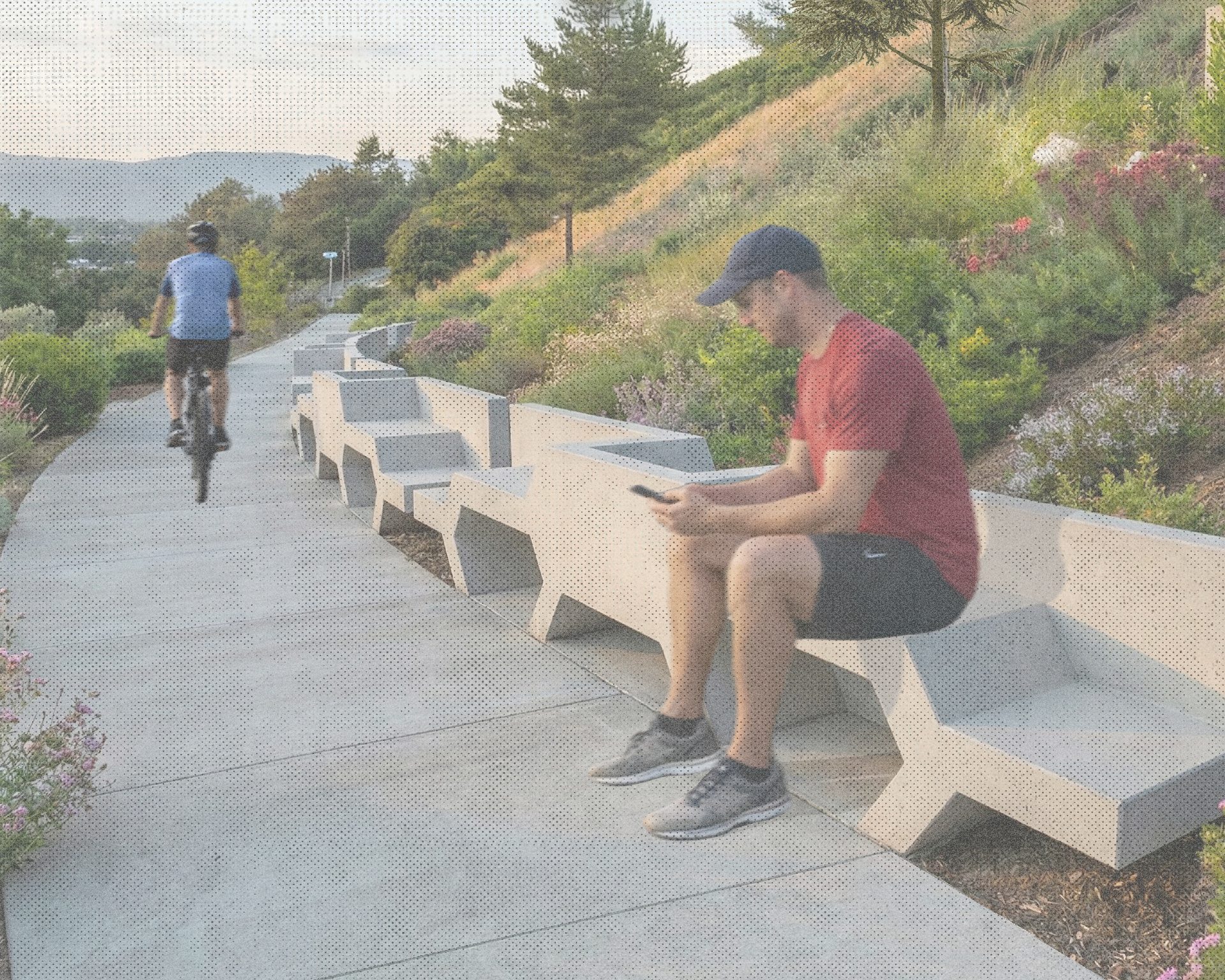
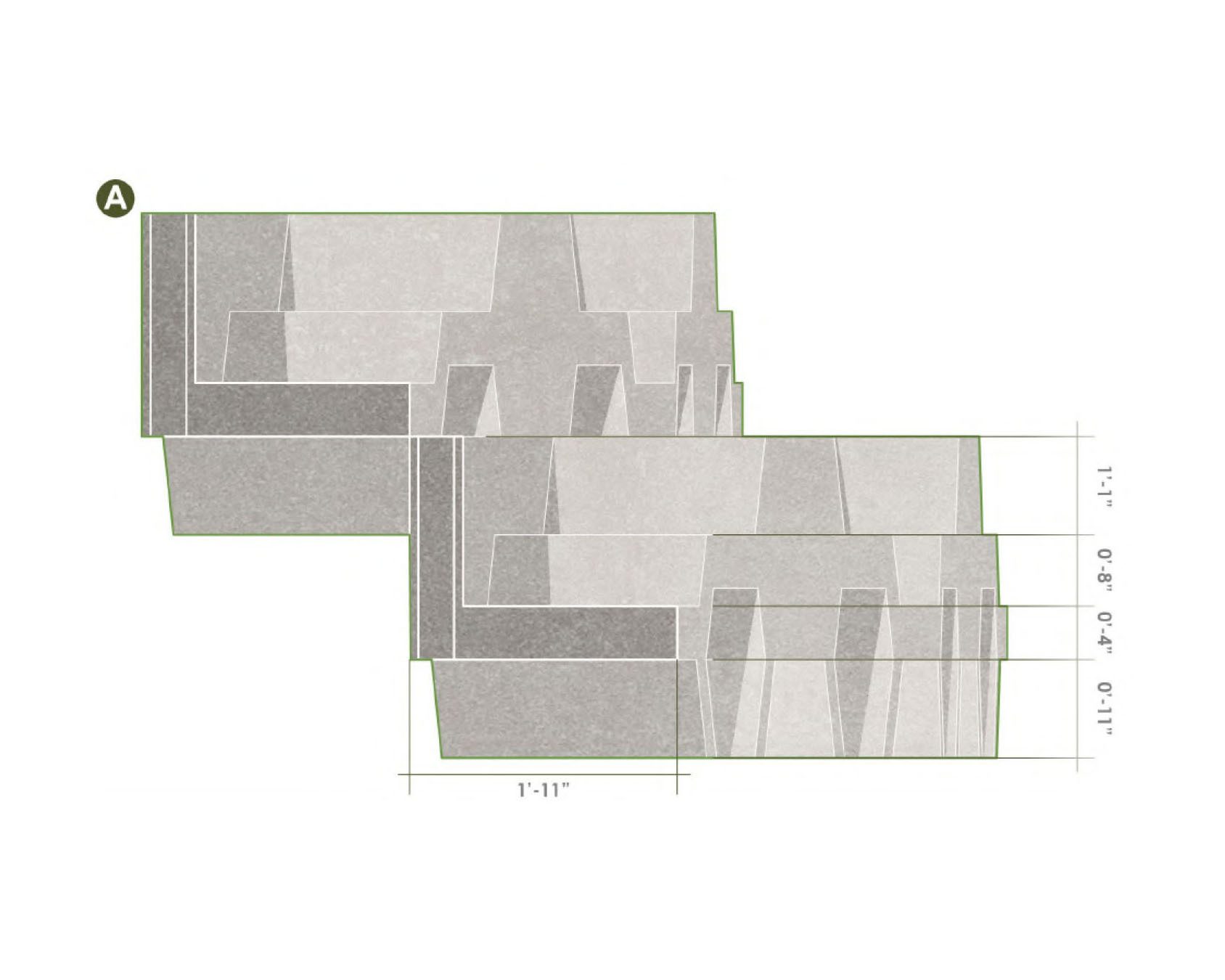
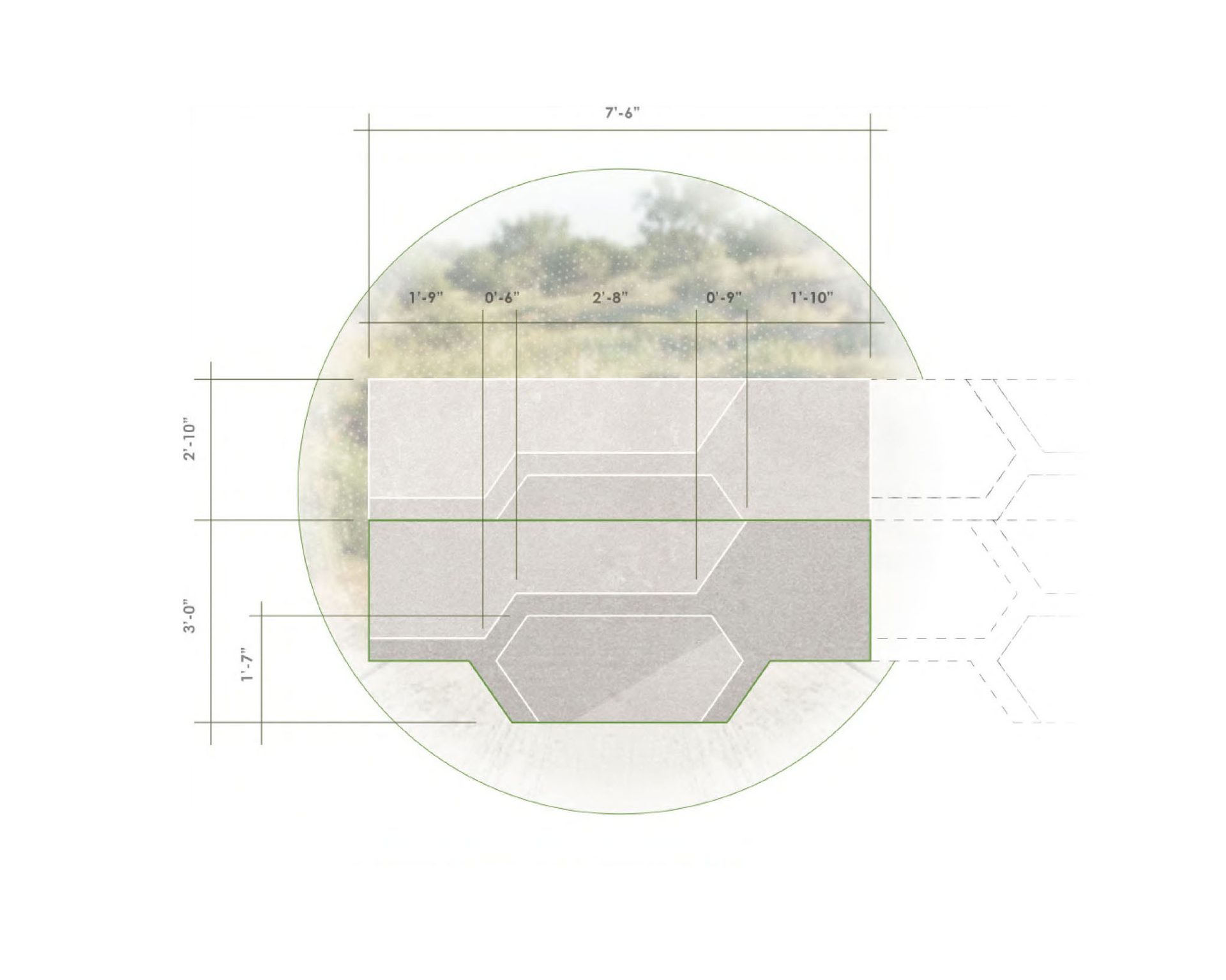
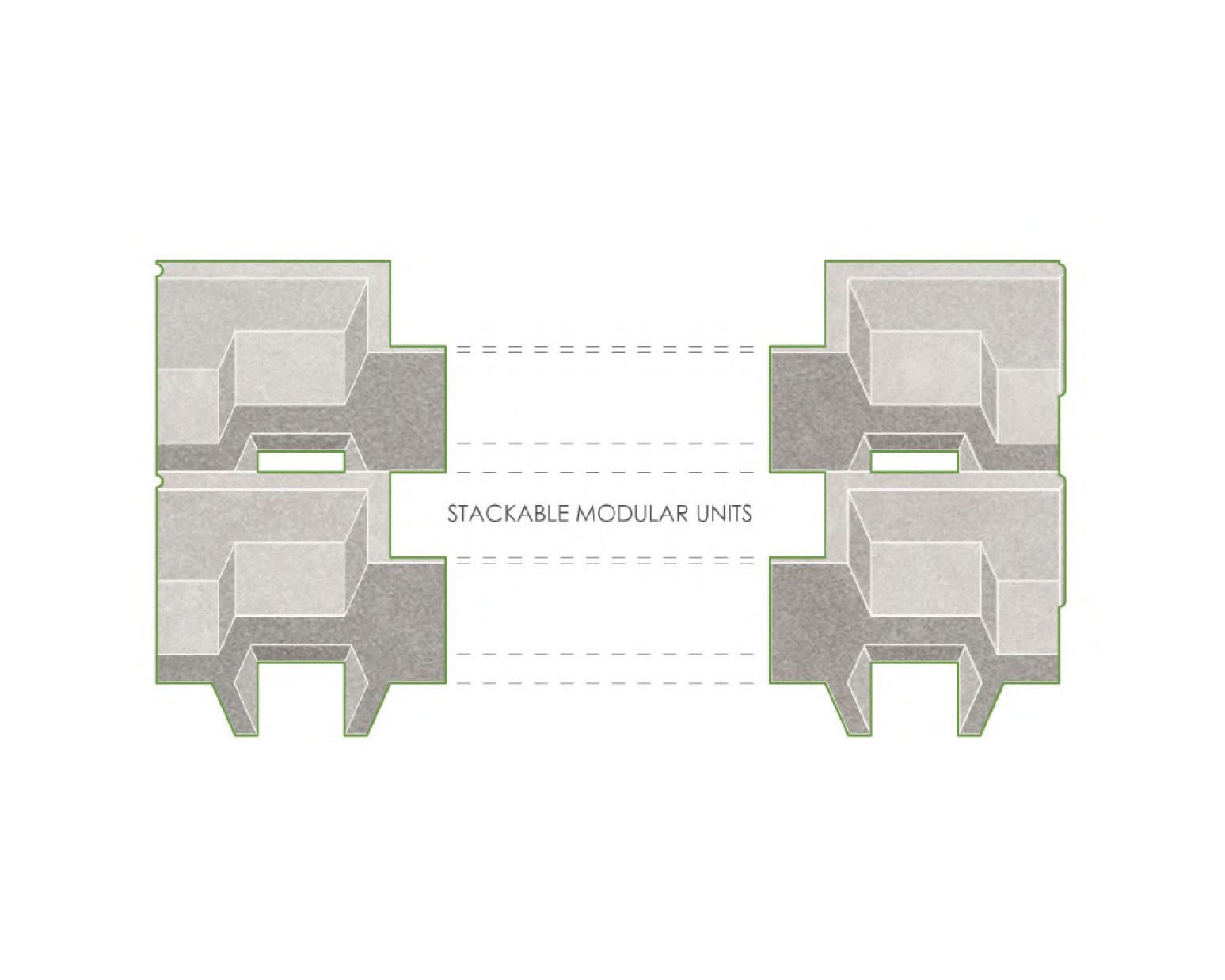
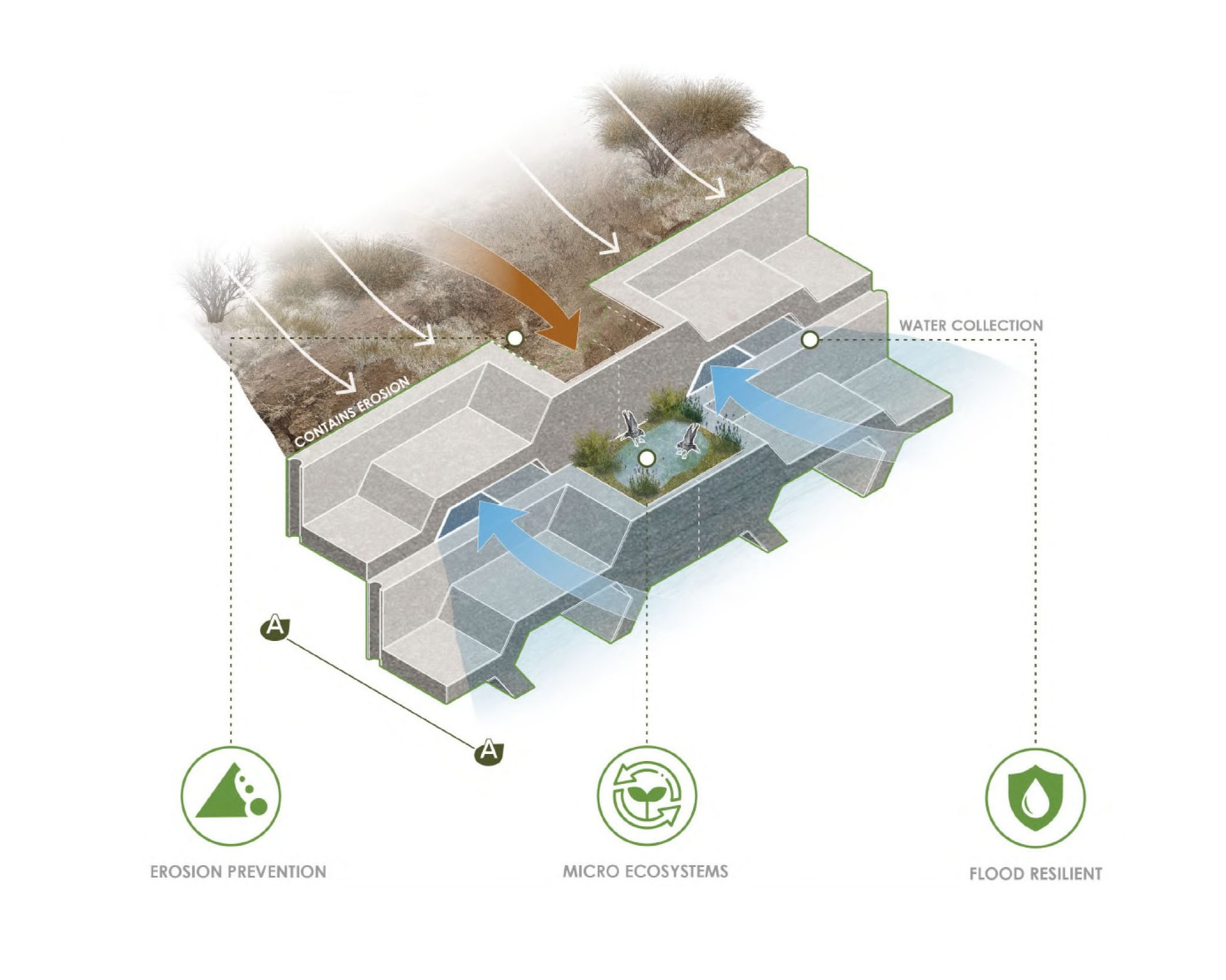
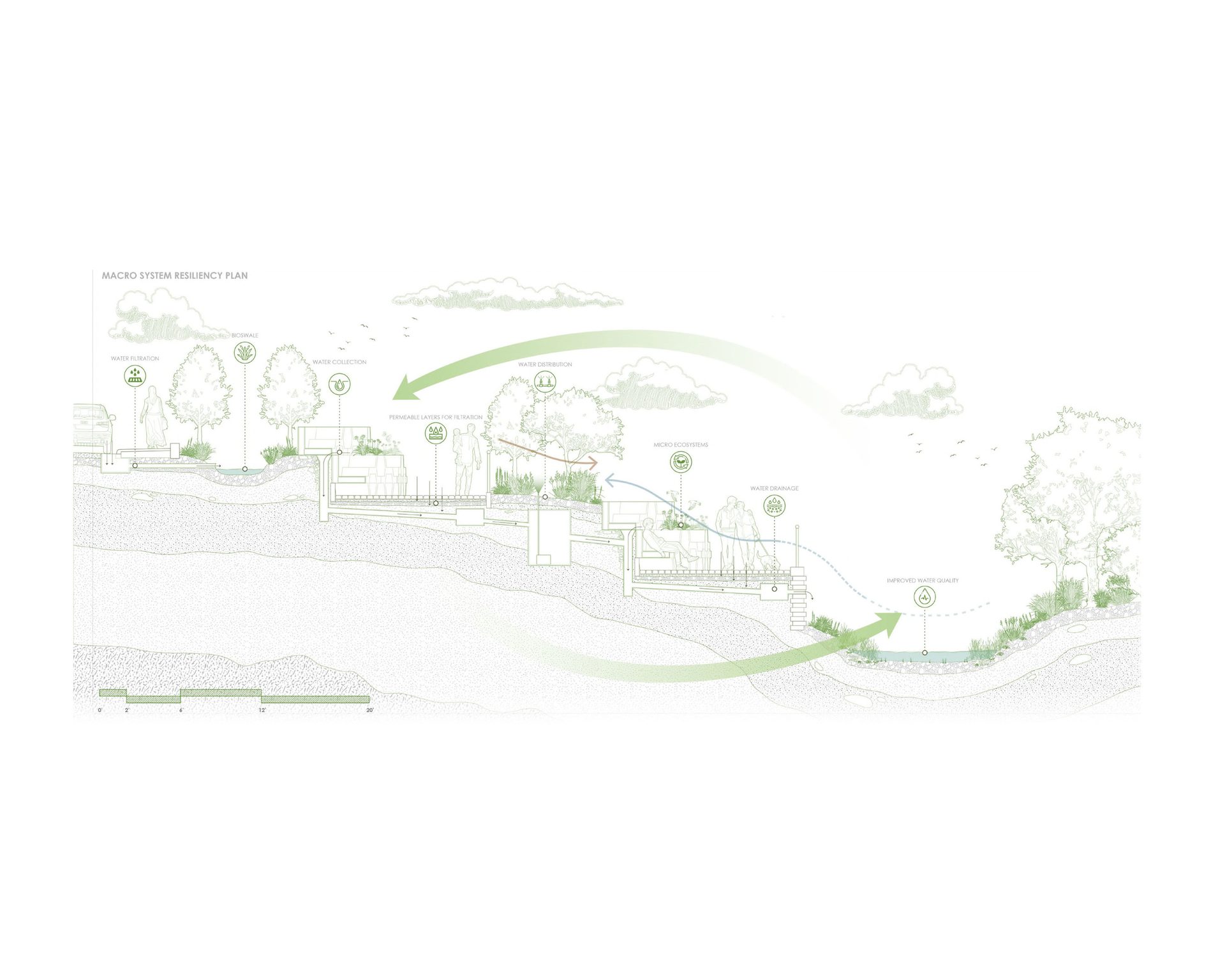
ABOVE: Renderings, drawings, and diagrams for Aftercast
Designing With Water, Not Against It
Houston’s climate demands a different approach to design. Rather than resisting water, Aftercast works with it. The project reimagines a precast concrete bench as a modular system that stabilizes soil, redirects stormwater, and creates opportunities for plant life.
Drawing inspiration from honeycomb structures, the design uses interlocking geometry to achieve both strength and adaptability. Openings between modules allow water to pass through, relieving pressure and reducing runoff. Over time, these spaces can support vegetation and microhabitats, transforming a static object into a living system.
“One big lesson was that even small design elements can contribute to a larger environmental impact,” Gonzalez Contreras said. “Design can and should do more than serve a single function.”
As a modular system, the benches can be arranged linearly or stepped with the site’s topography, responding to different levels of erosion risk. Designed with both performance and usability in mind, Aftercast meets standard seating dimensions and accessibility considerations while expanding the role of site furniture. It reframes everyday infrastructure as an active participant in environmental systems, offering a scalable approach to resilient urban design.
“What stands out most is how Gustavo translated ecological research into a practical and highly legible design proposal,” Plauché remarked. “The project moves across scales, from modular units to a larger resiliency strategy for water filtration, drainage, and habitat creation.”
This balance between concept and application reflects the broader goals of the studio and the competition alike: to produce ideas that are not only visionary but implementable.
“One big lesson was that even small design elements can contribute to a larger environmental impact. Design can and should do more than serve a single function.”
A Model for Future Practice
Bringing home the top prize has opened the door to the next phase of the project’s life. Gonzalez Contreras is now in discussions with QCP to develop Aftercast into a real-world product. He also sees the future experience as valuable for understanding how design ideas must adapt to manufacturing and industry constraints.
“Winning this award is personal because it responds to real issues I’ve experienced in Houston,” he added. “It reinforces my belief that even small design interventions can have an impact when they are connected to larger ecological systems.”
As cities face the pressures of climate change, projects like Aftercast point toward a more integrated future for design, in which infrastructure is not hidden or separate but embedded in everyday objects and experiences. At the Hines College, that mindset is already shaping how students approach the built environment. By combining research, experimentation, and real-world application, the next generation of designers is learning to think beyond form and function toward systems, resilience, and impact.
For Gonzalez Contreras, that shift is simple but powerful:
“Design should be flexible and adaptable,” he said. “It should respond to change and anticipate what comes next.”