Rising Designers, Changing Landscapes
Two Hines College students join the METROPOLIS Future100 list with projects exploring climate, culture, and community resilience from Houston’s bayous to Cambodia’s rivers
by Nicholas Nguyen • March 17, 2026
above: A Drawing from Elvia Delgado's The Shifting Oasis project
This spring, METROPOLIS Magazine named two students from the University of Houston Gerald D. Hines College of Architecture and Design to its Future100 list: fifth-year architecture students Elvia Karina Delgado and Kimhour Lor. Their recognition reflects both the strength of their individual design work and the broader commitment at the Hines College to addressing environmental and social challenges through architecture.
Since 2021, the magazine has awarded this recognition to the top 100 graduating students from accredited programs across the US and Canada, connecting honorees with a network of industry professionals. This helps students like Delgado and Lor become a part of the next generation of design leaders.
While their projects focus on different parts of the world — from Houston’s flood-prone landscapes to the hydrological systems of Cambodia — both students approach architecture as part of larger ecological and cultural systems.
Designing for Systems, Communities, and Change
For Delgado and Lor, the Future100 recognition represents both a personal milestone and an affirmation of the larger questions their work seeks to address.
“This award reflects my hard work and the belief that projects like Shifting Oasis are not just design exercises, but visions for the future of sustainable, community-focused design,” Delgado said. “I am truly honored to represent the University of Houston and be included in the Future100 as part of the next generation of designers and leaders.”
Lor described the recognition as equally meaningful.
“Earning the Metropolis Future100 award is a surreal honor,” she added. “When choosing my thesis topic, my goal was to address critical, overlooked issues by designing communities that are often unheard. This recognition honors not just the project, but the stories and people behind it.”
Both students developed their work with guidance from Dalia Munenzon, assistant professor at the Hines College and co-director of the Gulf Urbanism and Landscape Futures Lab, whose teaching emphasizes climate adaptation, environmental systems, and community-centered design. Munenzon nominated Delgado and Lor for the award because of their ability to approach architecture as a discipline capable of addressing complex social and ecological challenges.
“I decided to nominate my students because they represent the kind of emerging designers who are not only exceptionally talented but also deeply thoughtful about what architecture can and should do in a time of climate uncertainty,” Munenzon shared.
“This award reflects my hard work and the belief that projects like Shifting Oasis are not just design exercises, but visions for the future of sustainable, community-focused design,” Delgado said.
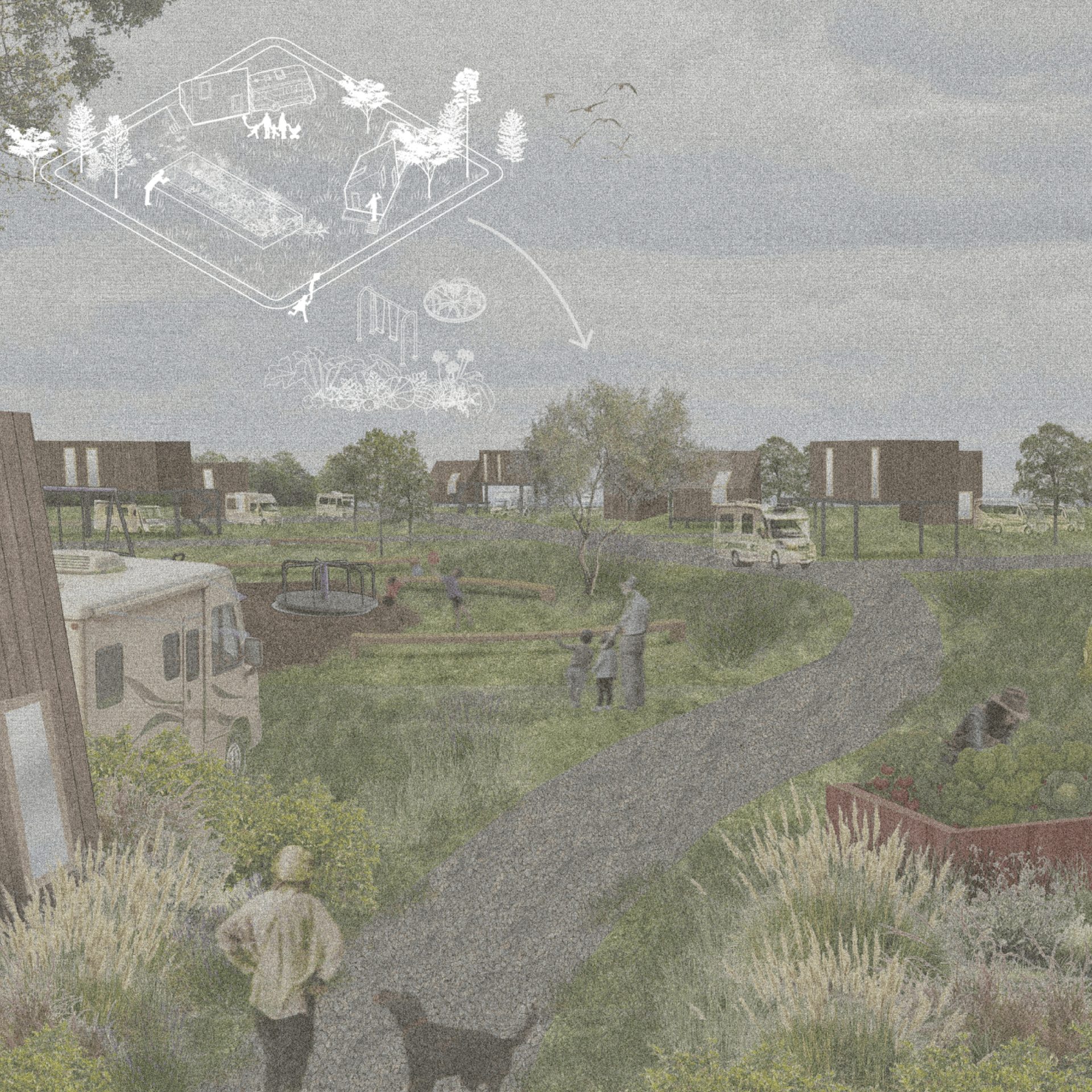
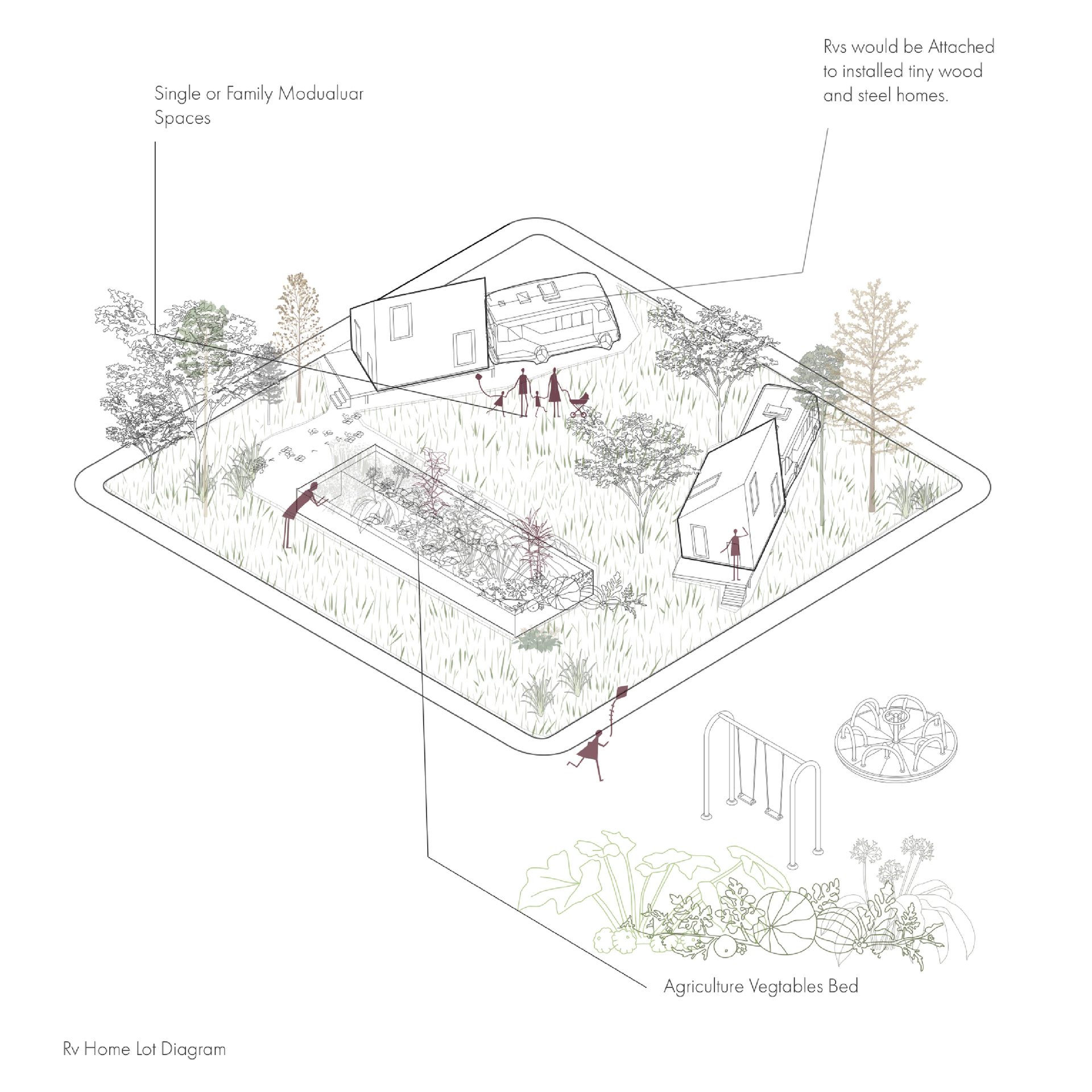
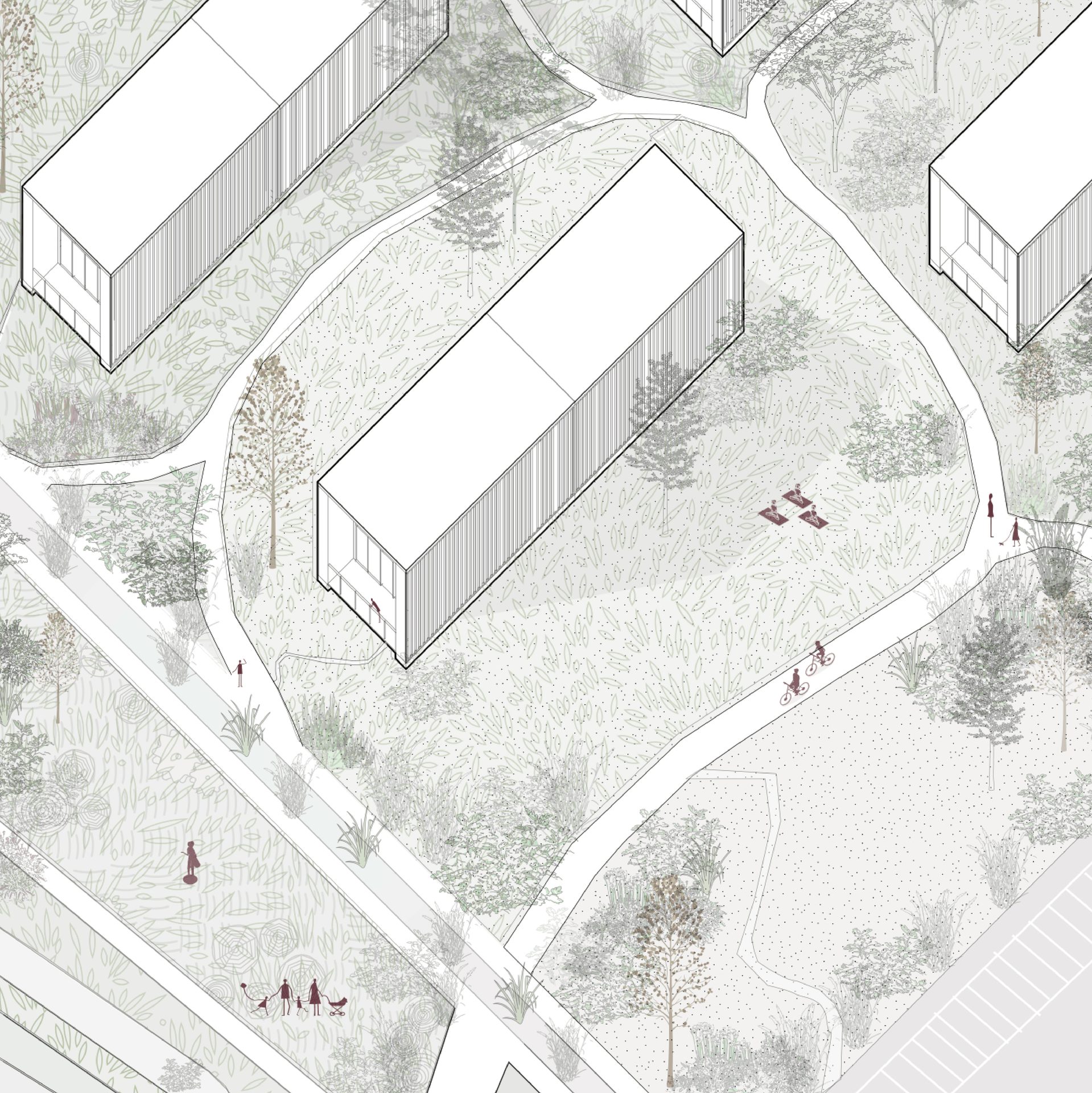
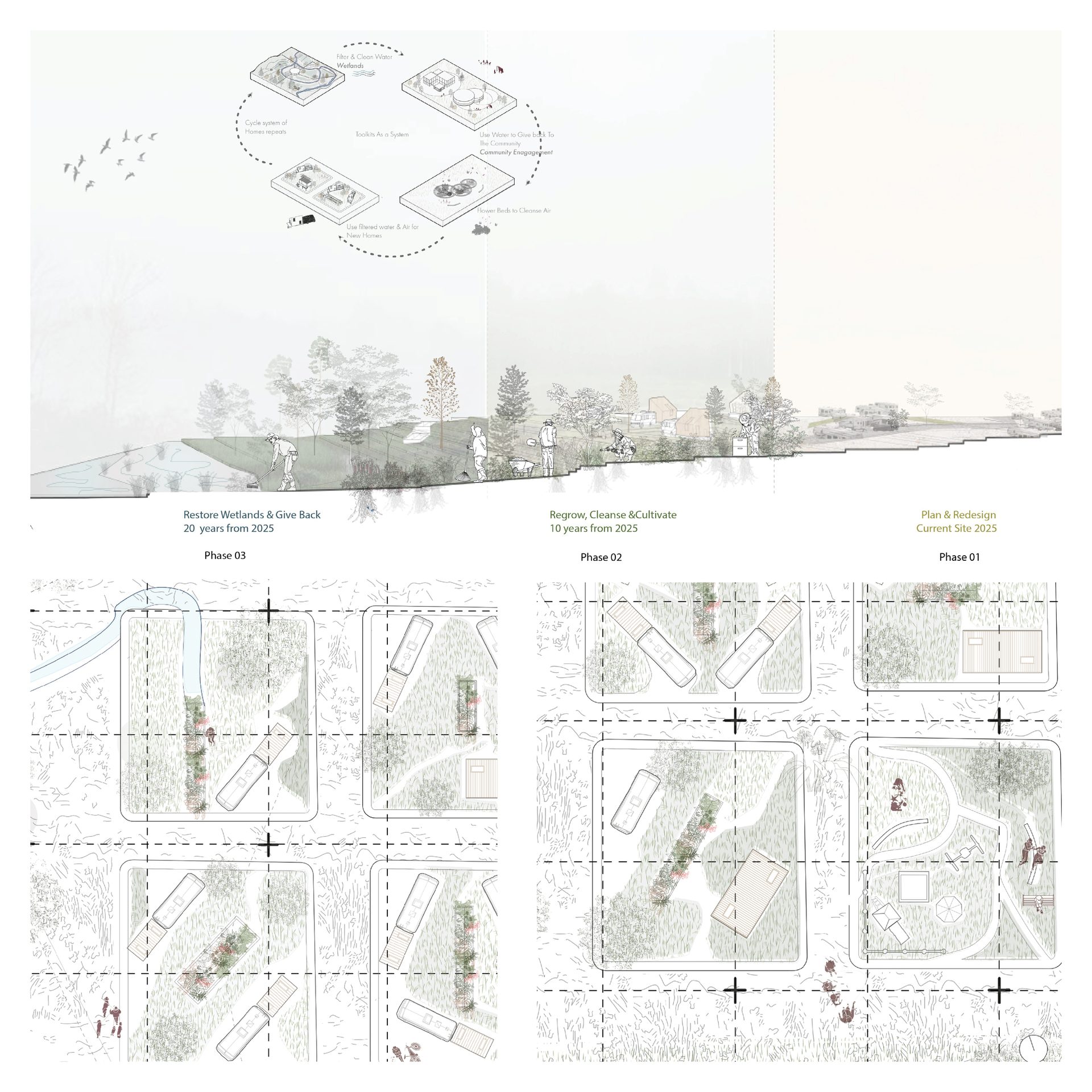
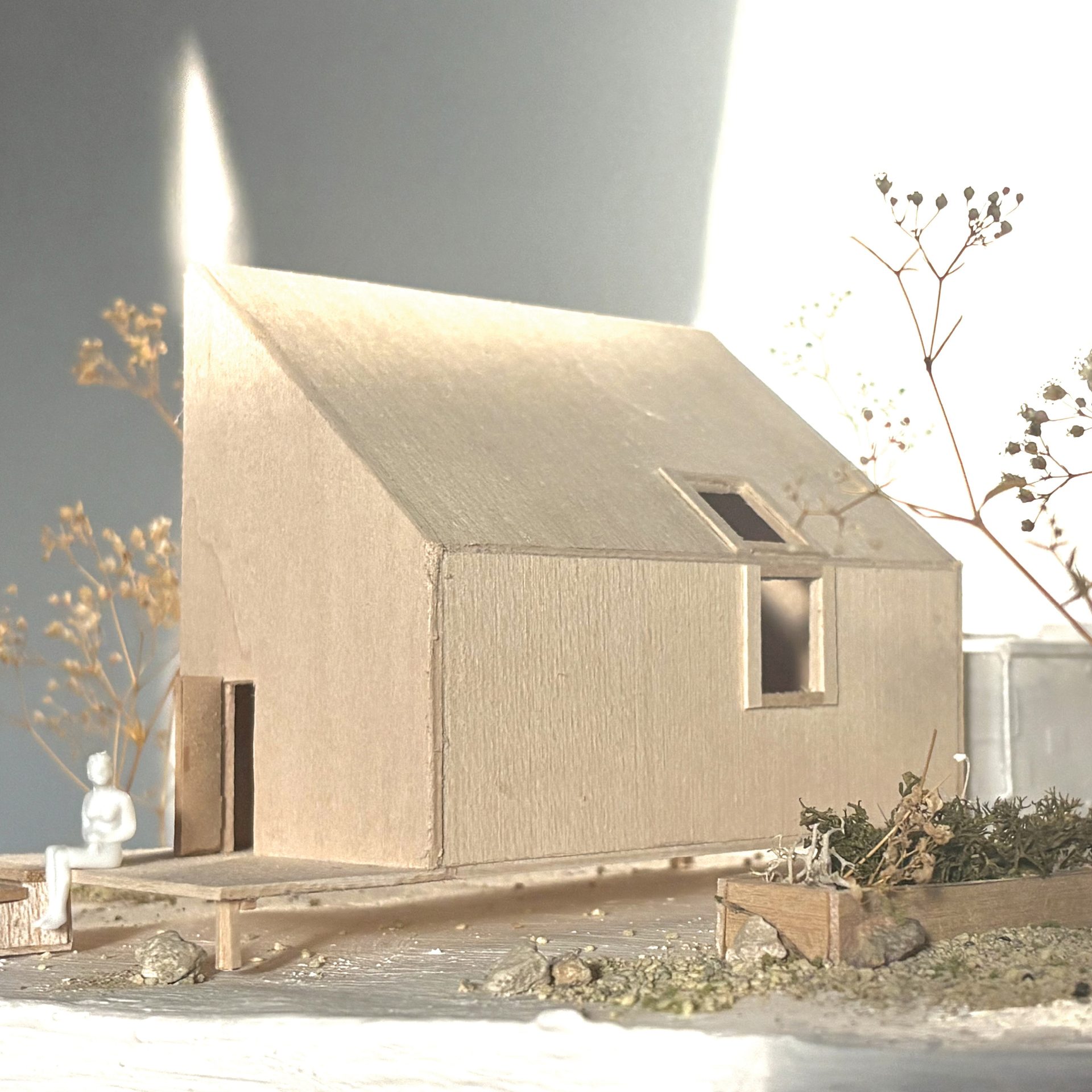
above: Images from The Shifting Oasis
Reimagining Vulnerable Landscapes
Delgado’s award-winning project, The Shifting Oasis, explores how landscape-driven strategies can transform underused and contaminated land in the Highlands area northeast of Houston into resilient public spaces. Rather than focusing solely on buildings, the proposal examines the environmental and social conditions shaping the region, particularly the impacts of flooding, pollution, and land ownership patterns near the San Jacinto River.
“The Shifting Oasis proposes a landscape-driven approach that transforms underused, contaminated lands in the Highlands into interconnected, restorative public spaces,” Delgado explained. “By integrating natural water-cleansing systems near flood zones and waste pits, we can visibly purify water, engage residents in the process, and rebuild trust through transparency and ecological participation.”
The project focuses heavily on the shifting boundary between land and water, an area that will increasingly be shaped by climate-driven flooding in the decades ahead. Delgado’s design integrates wetlands, agricultural systems, and adaptable housing strategies to create landscapes that evolve with environmental change.
Munenzon noted that Delgado’s work stands out for its systems-based approach and its ability to connect design decisions to broader social and environmental frameworks.
“Elvia brings a powerful systems-oriented mindset to questions of housing, land, and environmental vulnerability,” Munenzon said. “She confronts overlooked landscapes and marginalized communities with care and precision, translating ecological processes and social structures into thoughtful architectural strategies.”
To develop the project, Delgado conducted extensive research into land tenure, housing conditions, and environmental risks, particularly near the San Jacinto River Superfund site. Her proposal integrates wetland restoration, modular housing, and community infrastructure into a phased master plan that adapts over time as climate conditions shift. Through the process, Delgado began to see architecture less as a single object and more as a network of relationships between environment, policy, and people.
Among the most important lessons she drew from the project was learning to view spaces as interconnected systems shaped by social and environmental forces. She also emphasized the importance of understanding communities and remaining engaged with them even after design work is complete. Finally, the project reinforced the need to deeply research a site’s history and current conditions so that design narratives can evolve over time.
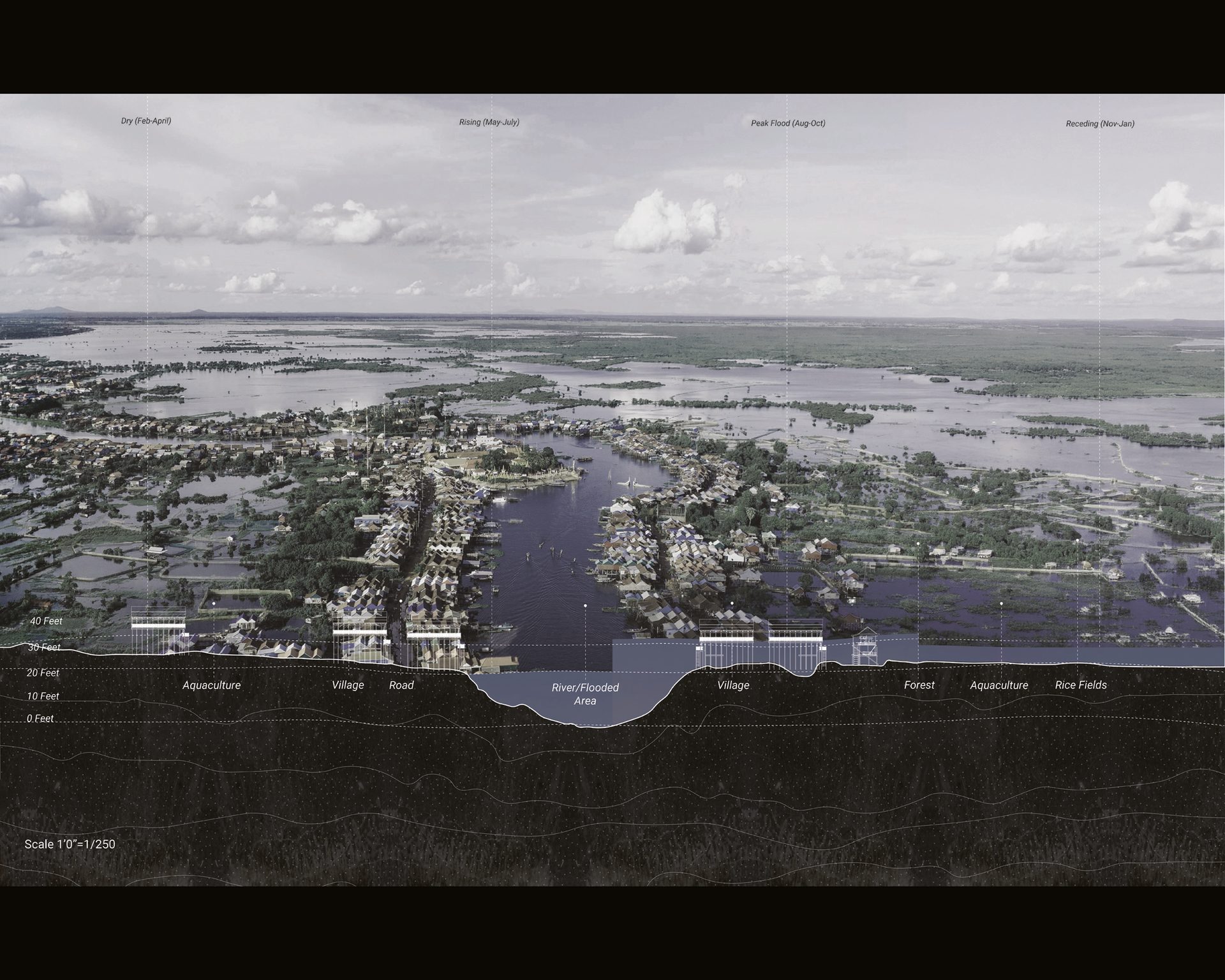
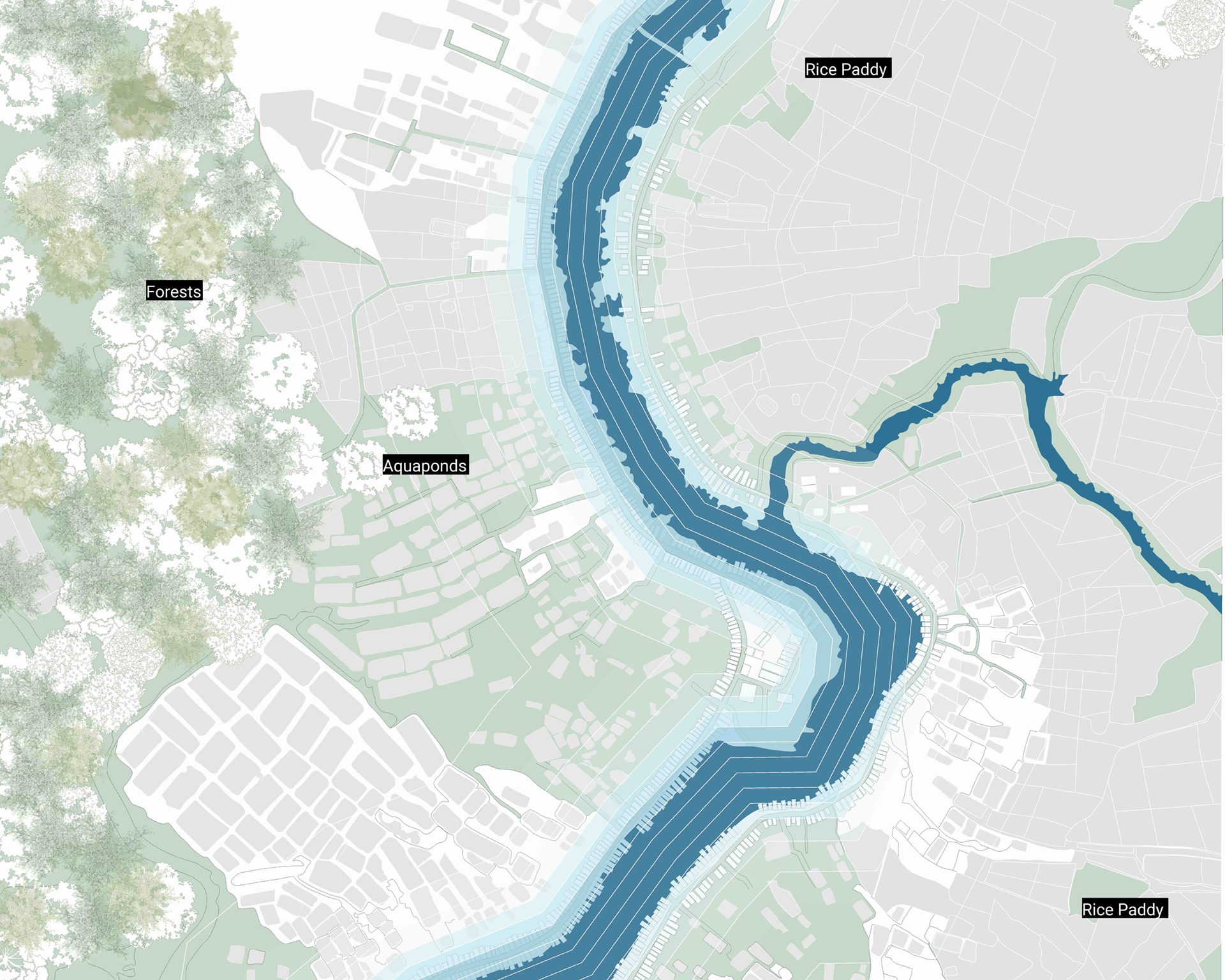
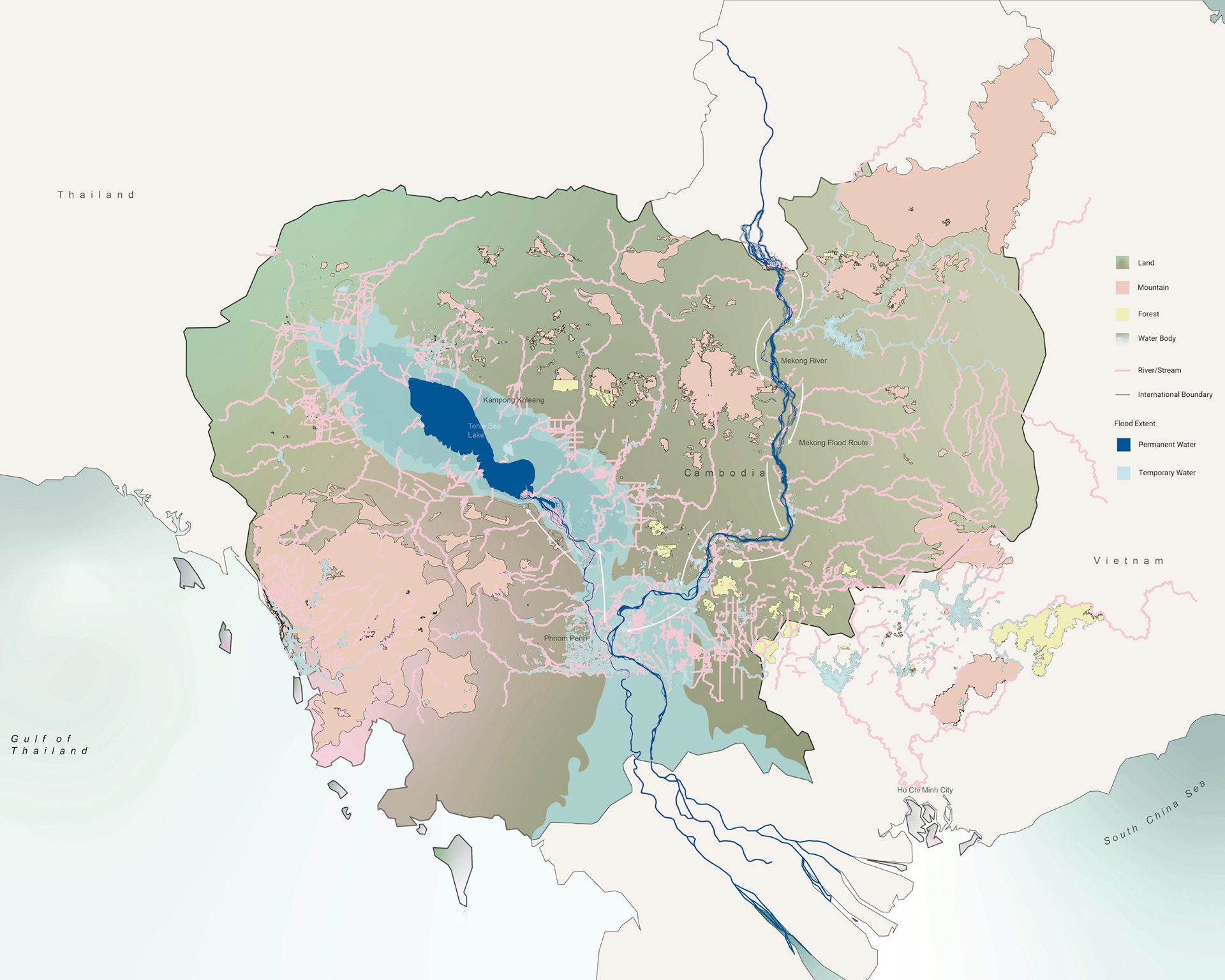
above: Images from Lor's ongoing thesis project, Return of a river: reimagining flood resilience in phnom penh
Designing with Water
While Delgado’s work focuses on Houston’s landscapes, Lor’s thesis examines the dynamic hydrological systems of Cambodia. Her project, Return of a River: Reimagining Flood Resilience in Phnom Penh, proposes new ways of understanding flood-prone environments along the Mekong and Tonle Sap rivers. Rather than viewing flooding solely as a threat to be controlled, Lor’s project reframes water as a generative force shaping settlement, culture, and everyday life.
“The project explores a new ecological paradigm in which the water that once drowned Phnom Penh’s most vulnerable communities becomes the very force that sustains them,” Lor said.
Her research examines communities living along river edges, many of whom have occupied the land for generations despite lacking legal recognition. The thesis proposes architecture as an adaptive system capable of responding to fluctuating water levels. Through modular housing strategies and flexible construction methods, communities could build and modify their environments over time as environmental conditions change.
“By celebrating water and the natural movements of the flood rather than resisting them, there will be a symbiotic relationship between people, water, and land,” Lor said.
Munenzon described the project as an unusually complex and thoughtful undergraduate thesis.
“Kimhour’s work stands out for its rare combination of intellectual rigor and personal depth,” Munenzon said. “Her honors thesis transforms lived experience into design intelligence, using memory, cultural research, and environmental analysis to rethink how architecture can coexist with water rather than resist it.”
Lor’s research included detailed studies of monsoon cycles, comparisons of satellite imagery, and spatial diagrams illustrating seasonal changes in housing, transportation, and livelihoods. Through these investigations, she developed housing typologies elevated on stilts, modular structures adaptable to change, and wetlands integrated into settlement patterns. Together, these elements form a resilient landscape that evolves with water levels rather than fighting against them.
For Lor, the project reinforced the profound responsibility architects carry when designing for communities.
“I learned how deep an imprint any design can leave on the communities, especially when it’s created without true understanding of the people it affects,” she said.
She also came to see design as a layered process requiring careful consideration of environmental, social, and cultural factors. This resulted in viewing design as becoming layered, too. Lor’s project told the story of how people lived and moved there, and she used design to communicate that narrative.
“Both students embody the spirit of Future100,” Munenzon said. “They are creative, rigorous, and socially aware designers who are already contributing meaningful new ways of thinking about sustainability and resilience.”
Studio Context and Mentorship
Both Delgado and Lor developed their projects within Munenzon’s broader teaching framework, which emphasizes climate adaptation and systems-based design. Her courses encourage students to examine environmental challenges across multiple scales—from territorial mapping and ecological analysis to neighborhood strategies and architectural interventions. Those lessons were strengthened by Munenzon’s mentorship throughout the studio.
“Having Professor Munenzon was a wonderful experience,” Delgado said. “She taught me to see architecture not just as spaces, but as people first — through resilience and community awareness.”
Her guidance helped students maintain an open mindset as they navigated complex design questions. Throughout the thesis process, Munenzon played a key role in helping Lor navigate the project’s complexity. At times when the scope of the project felt overwhelming, Munenzon helped her break the research and design process into manageable steps.
“One of the most memorable parts of working with Professor Munenzon was how she pushed me to go deeper, not just in the design, but in who I’m designing for,” Lor said. “Her patience and guidance gave me the courage to trust myself.”
Through research, fieldwork, and collaboration, students explored how flooding, land ownership, infrastructure, and public health intersect with the built environment. The goal, Munenzon explained, is to help students understand architecture as part of larger social and environmental systems rather than as isolated objects.
Looking Toward the Future
For Munenzon, Delgado and Lor’s recognition highlights the potential of emerging designers to rethink how architecture responds to global challenges.
“Both students embody the spirit of Future100,” she said. “They are creative, rigorous, and socially aware designers who are already contributing meaningful new ways of thinking about sustainability and resilience.”
Looking ahead, Delgado hopes to continue exploring the intersection of architecture and landscape systems in her professional career. After graduation in spring 2026, she plans to begin working in practice while eventually pursuing a master’s degree in landscape architecture.
“I plan to work locally and internationally, starting in Houston and similar cities, to focus on sustainable, environmentally conscious design,” she said.
Beyond technical skills, Delgado hopes to continue using design as a platform for advocacy and community engagement.
Once she has her diploma, Lor hopes to pursue professional work that responds to both landscape and community conditions.
“I plan to begin working and gaining experience in practice,” she said. “I hope to work on projects that respond thoughtfully to landscape and community and that operate beyond just the building scale.”
For her, the Future100 recognition represents not just a personal achievement but also a platform to advocate for the issues she explored in her thesis.
As they prepare to graduate and enter professional practice, Delgado and Lor carry with them a perspective shaped by research, collaboration, and a commitment to communities and landscapes. Their work suggests a future for architecture that moves beyond buildings alone and toward systems that connect people, environment, and culture in new and resilient ways.