The Wearable Future
Award-winning projects from Hines College students demonstrate how thoughtful design can make advanced technologies more intuitive, accessible, and impactful
by Nicholas Nguyen • June 24, 2026
ABOVE: The SynTec Concussion Diagnosis Headset by Mehdi Mortazavi
The most successful design solutions often begin long before sketches, prototypes, or finished products. They begin with a question.
For University of Houston Gerald D. Hines College of Architecture and Design graduate students Mehdi Mortazavi and Dillon Narcisse, those questions centered on how emerging technology could improve health, performance, and accessibility. Their answers earned international recognition at the FIT Sport Design Awards, where both students were honored for projects that explore the intersection of wearable technology, human-centered design, and real-world problem-solving.
Mortazavi's project, SynTec Concussion Diagnosis Headset, received three awards: Emerging Sport Apparel Designer of the Year, Winner in Sportswear Design / Innovation, and Winner in Sportswear Design / Sport Gadgets. Narcisse earned Winner in Sport Equipment Design / Sport Gadget for Optimum AR Trainers.
Their projects address different challenges. SynTec focuses on concussion detection while Optimum AR Trainers reimagines home fitness. Both were driven by extensive research, iterative testing, and a commitment to designing around people rather than technology alone.
Identifying Opportunities Through Research
Before developing concepts, both industrial design students (who recently graduated in May 2026) spent months studying users, industries, and emerging technologies to better understand unmet needs.
For Mortazavi, that process began after a project recommendation from industrial design co-director Jeff Feng and under the supervision of professor Min Kang. As he researched concussion detection and treatment, he identified a significant gap between available technologies and the people who need them.
"After the initial preliminary research, I saw the value in designing an affordable, accurate, and rapid concussion assessment device for individuals and communities with limited access to advanced medical resources," Mortazavi said.
That research led to SynTec, a wearable headset that combines Vestibular/Ocular-Motor Screening (VOMS) with EEG brainwave monitoring to provide a more accessible approach to concussion assessment.
Narcisse's project emerged from a different challenge. Inspired by the growing popularity of home fitness during the COVID-19 pandemic, he examined how people exercise within their own homes and the limitations they face.
His resulting concept, Optimum AR Trainers, uses augmented reality, motion tracking, and spatial awareness to create personalized workout experiences that adapt to a user's physical environment.
While the projects serve different audiences, both students relied on a similar research methodology. Mortazavi conducted literature reviews, surveys, and interviews with medical professionals and patients. Narcisse interviewed athletes and fitness enthusiasts while observing how users interacted with workout spaces in their homes.
"This phase included a main survey shared on Reddit and various Facebook groups, as well as several interviews with medical professionals and patients," Mortazavi said. "Through this process, I was able to identify gaps in concussion assessment methods and better understand how mild traumatic brain injuries occur, how they are currently treated, and where design could improve the overall experience."
Similarly, Narcisse found that observing users in context revealed important insights.
"I also conducted interviews with athletes and performed observational research to study how users exercised within their personal environments," he shared. "This helped me understand how physical space, equipment limitations, distractions, and movement patterns impacted the overall experience."
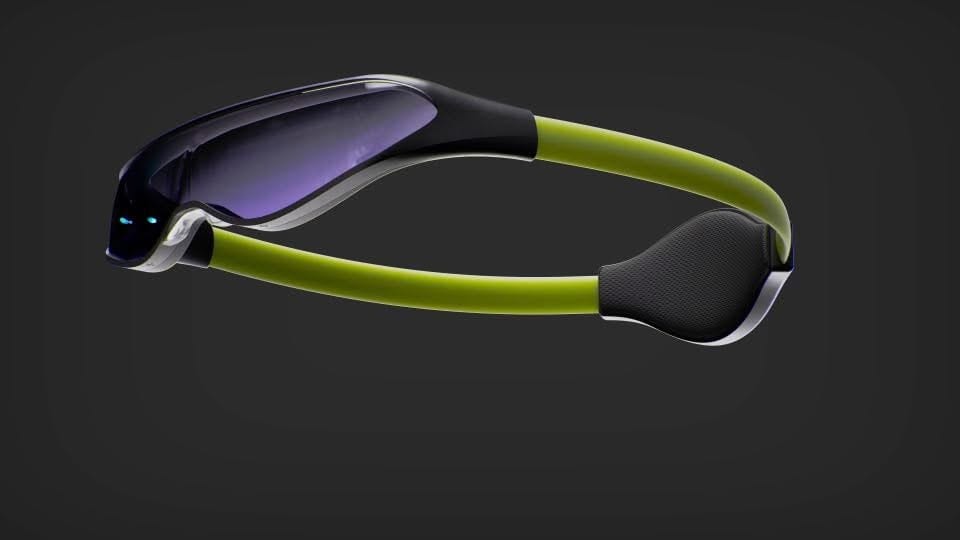
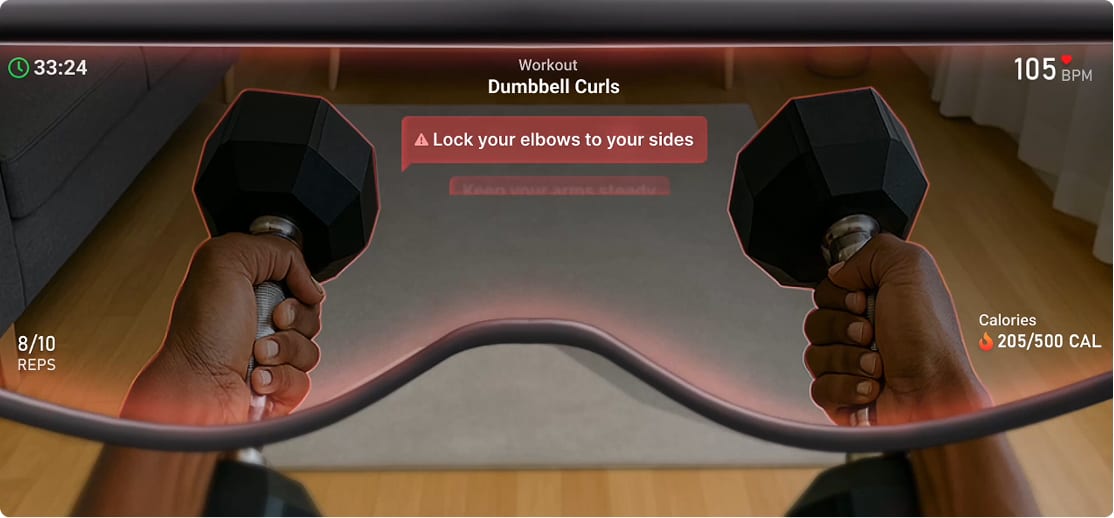
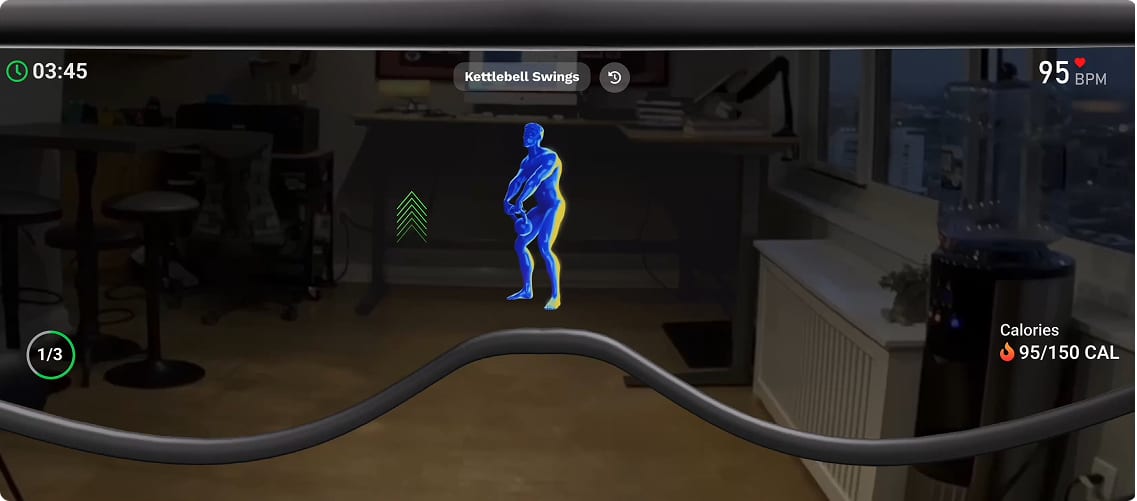
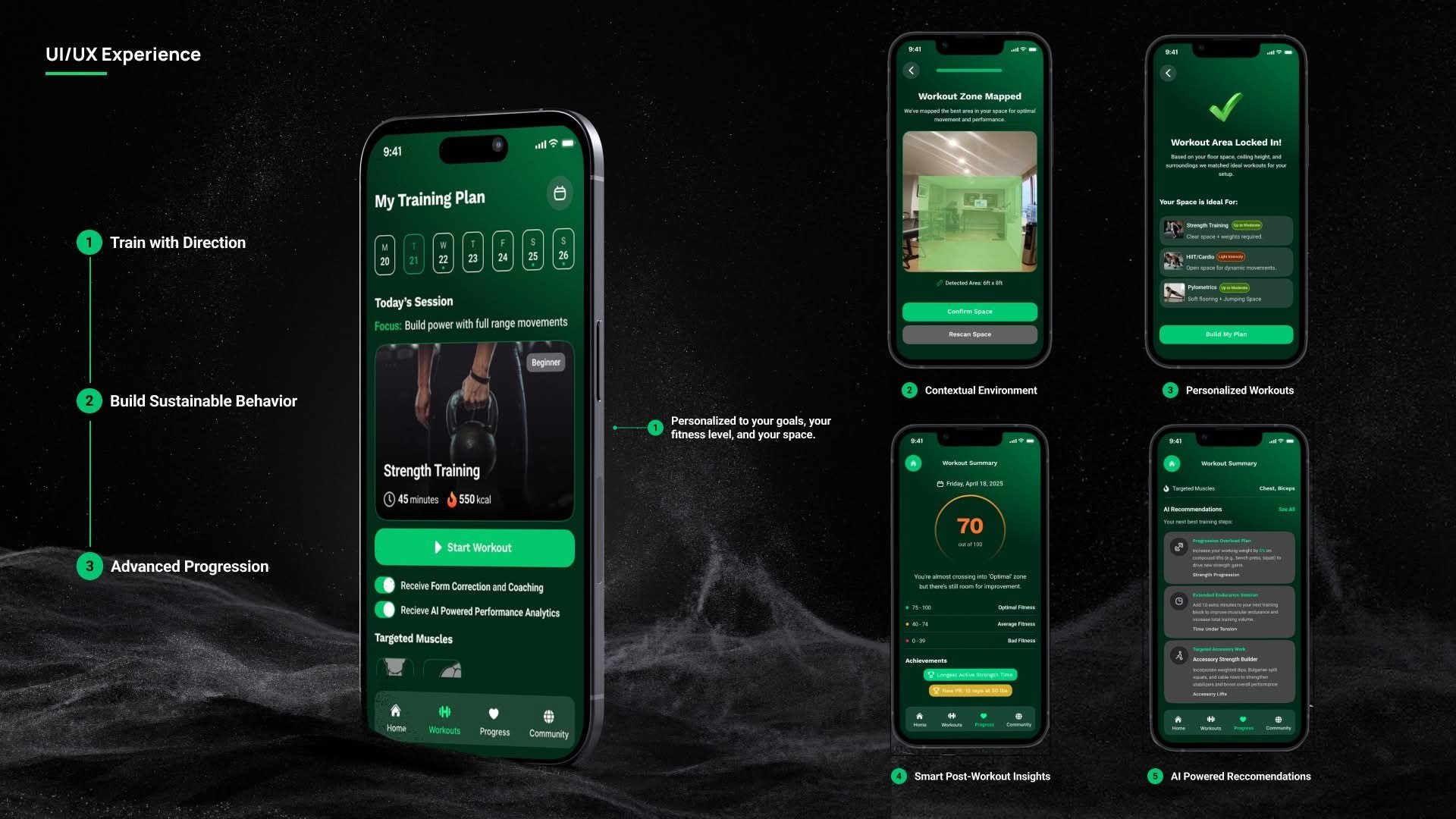
ABOVE: Images from Narcisse's project, Oprtimum AR Trainers
Exploring Emerging Technologies
As both projects evolved, emerging technologies became tools for addressing human challenges rather than ends in themselves.
SynTec combines eye-tracking sensors, EEG sensors, and augmented reality-style optics into a wearable device designed to streamline concussion screening. Users follow visual prompts while the headset simultaneously monitors gaze movement and brainwave activity.
Optimum AR Trainers similarly integrates multiple technologies into a single experience. The headset scans a user's surroundings and adapts workouts based on room size, layout, available equipment, and movement patterns. Through augmented reality overlays, users receive real-time feedback without needing to constantly look at a phone or screen.
In both projects, AI supported parts of the design and development process. Mortazavi used ChatGPT to organize research data and information he collected. He also used AI tools while developing software and exploring technical solutions for eye tracking and wearable sensing. For Narcisse, AI helped uncover opportunities for innovation and identify major themes in all the research and interviews he conducted.
Despite the growing role of AI, both projects remained grounded in user research, design thinking, and human decision-making.
Learning Through Testing
While research established the foundation for both projects, testing helped transform concepts into more refined solutions.
Mortazavi developed multiple low-fidelity and 3D-printed prototypes, inviting fellow students to try on the headset and provide feedback. Those sessions quickly revealed challenges he had not anticipated.
"I tested the prototypes with as many students at the Hines College as I could, and I quickly learned that a one-size-fits-all design would not work," Mortazavi said.
Feedback from users with different hairstyles, head shapes, and physical characteristics ultimately led him to redesign the headset around adjustability and inclusivity.
At the same time, he explored ways to make eye-tracking technology more affordable. Using open-source resources, webcams, safety goggles, and custom software, he created experimental prototypes that demonstrated the potential for low-cost eye-tracking systems.
Narcisse relied on rapid iteration as well, using clay models, 3D-printed prototypes, and interface studies to evaluate both the physical product and the digital experience.
Because Optimum was designed as a complete system rather than a standalone object, testing extended beyond the headset itself to include augmented reality interfaces, feedback systems, and user interactions.
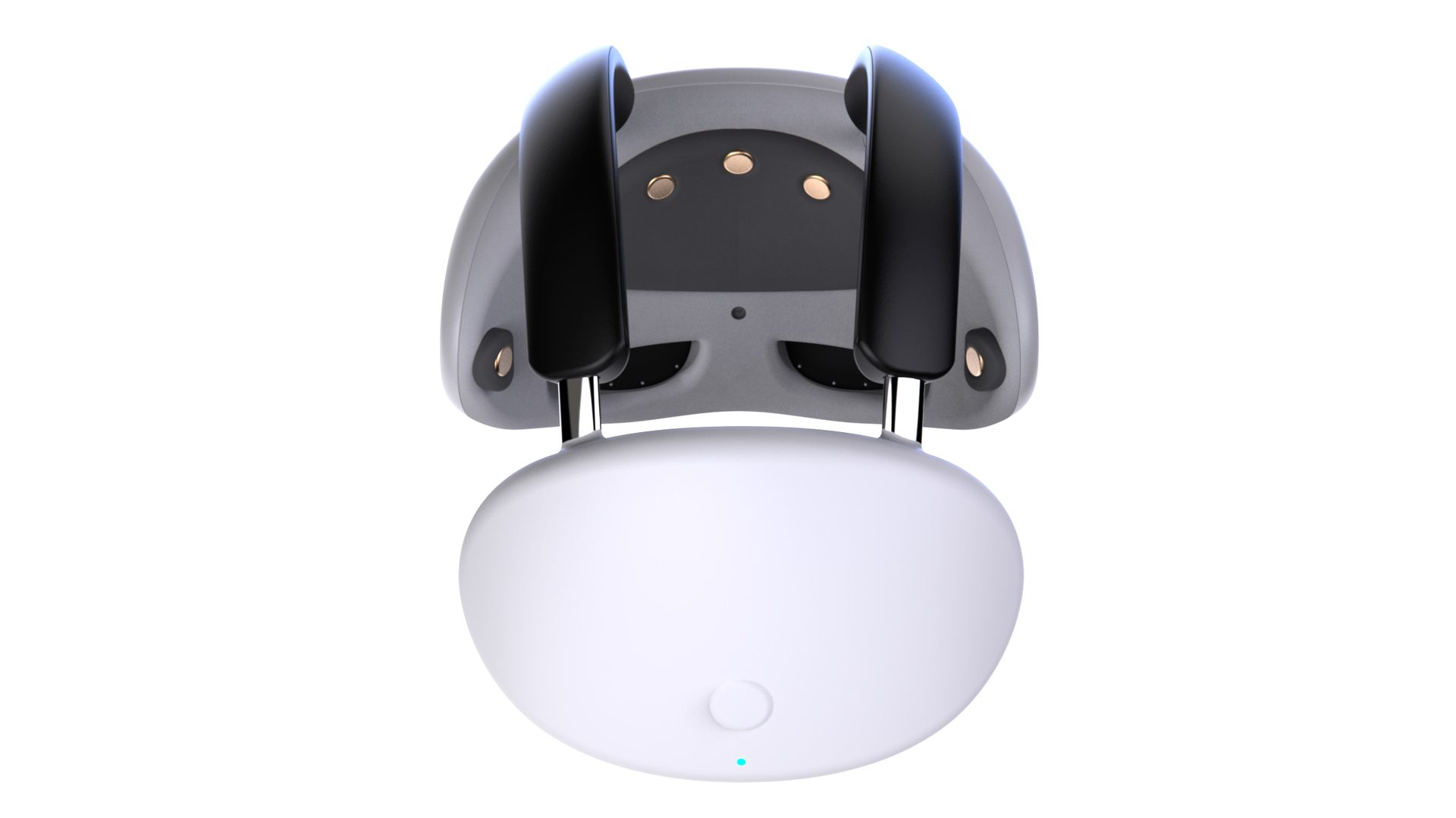
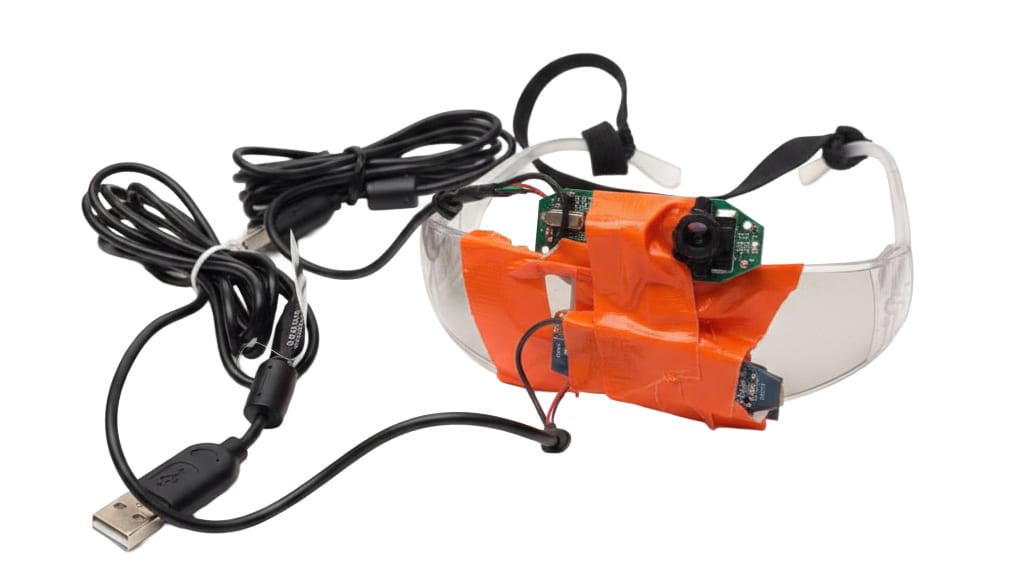
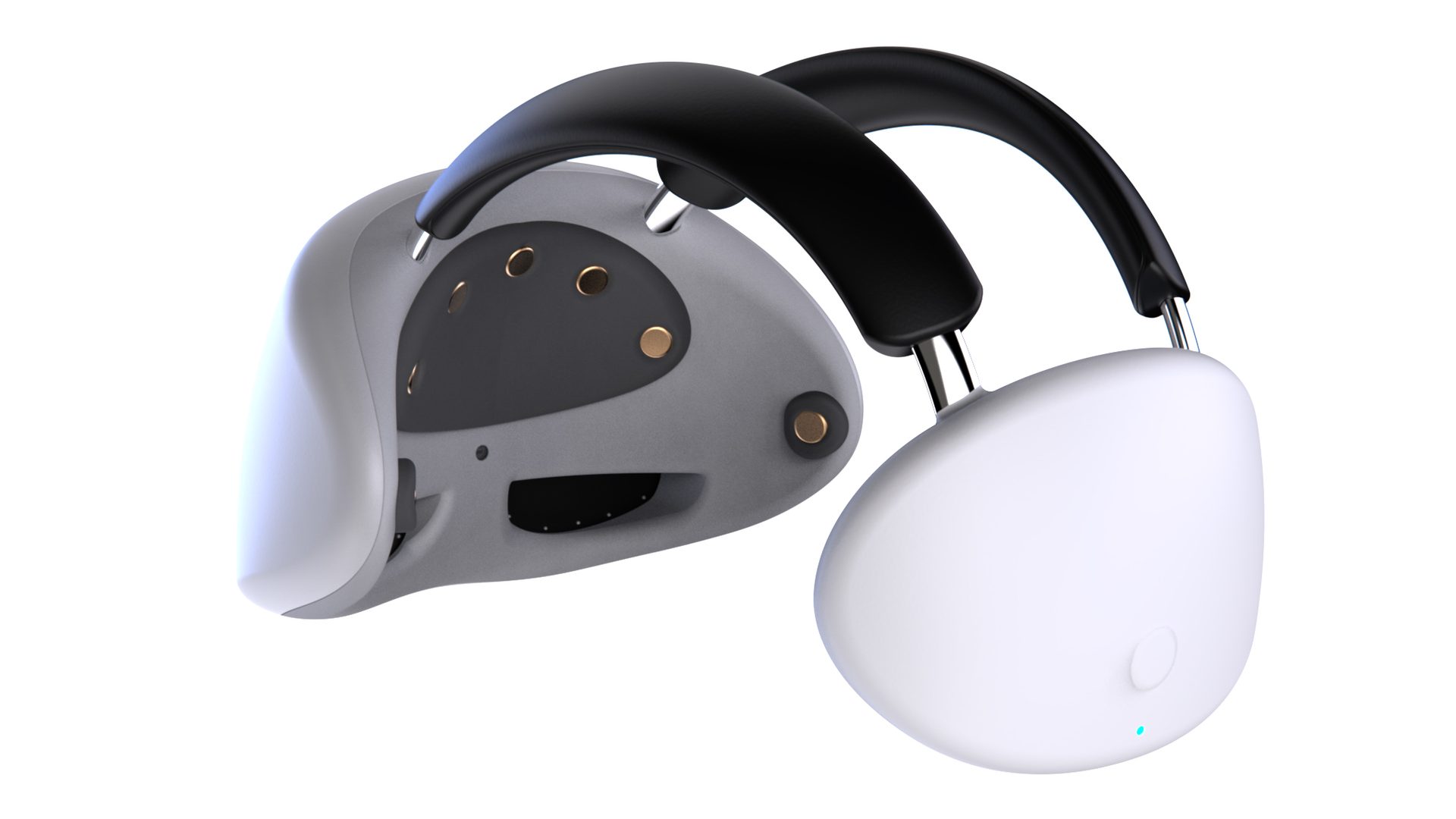
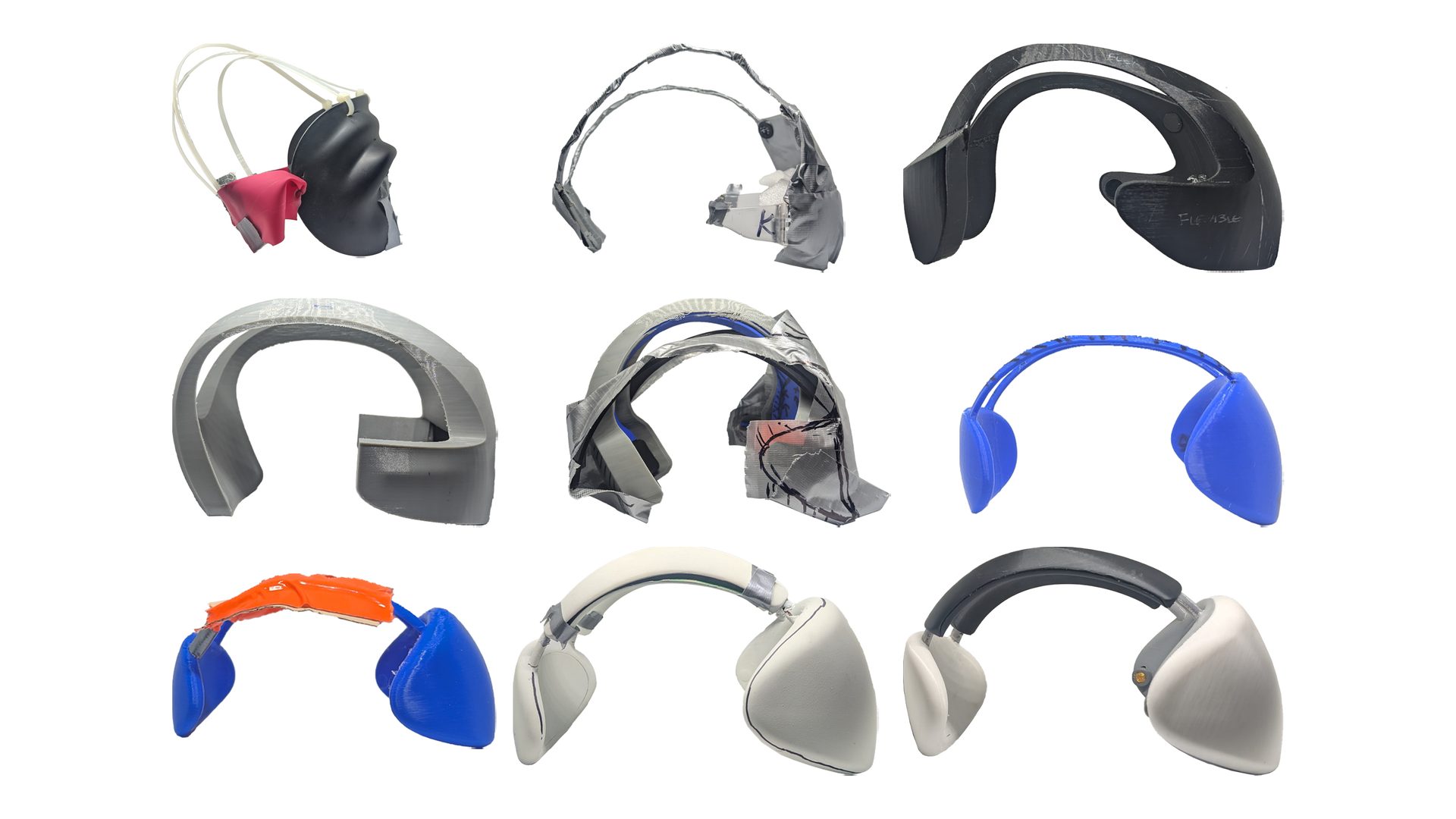
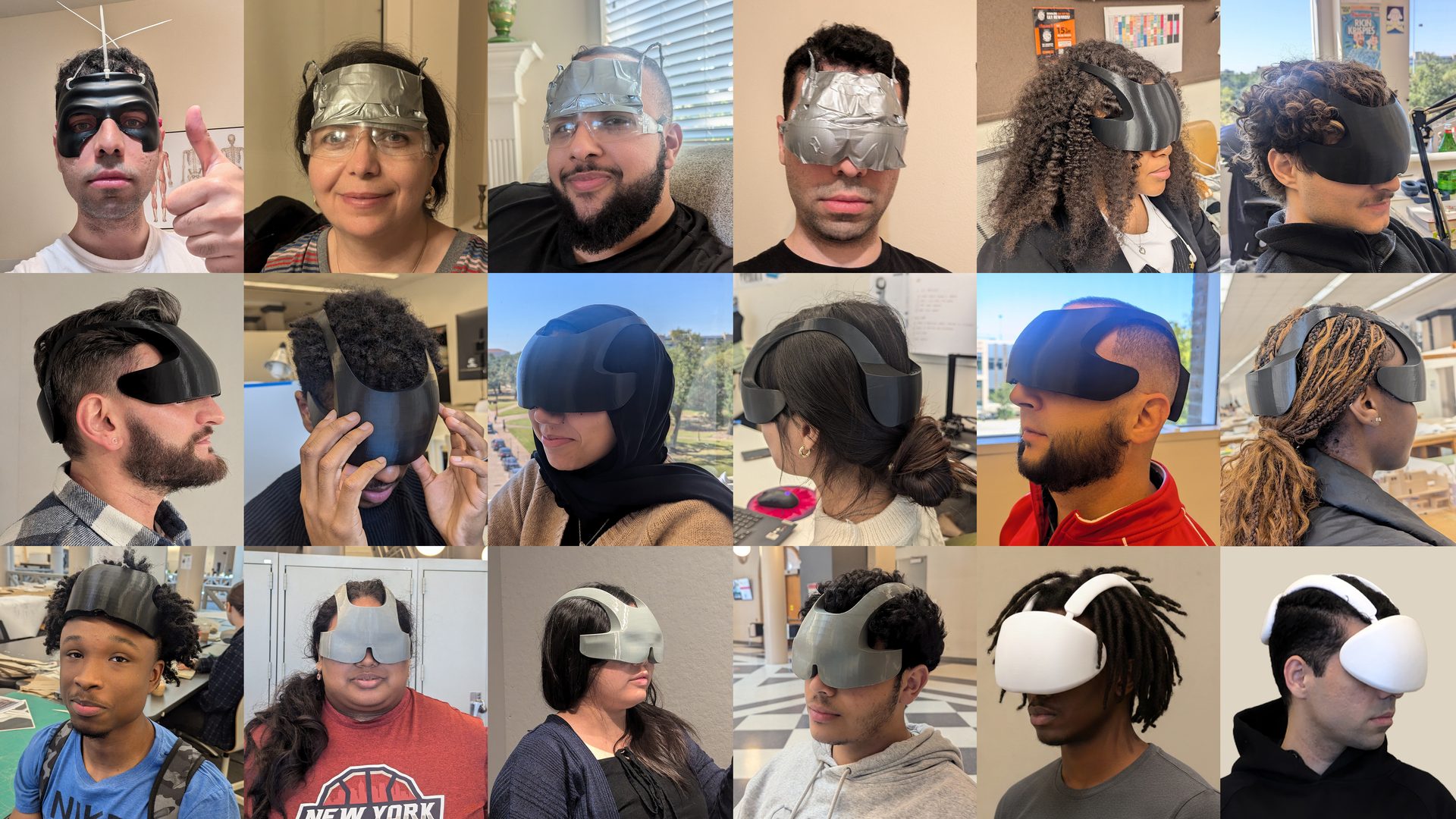
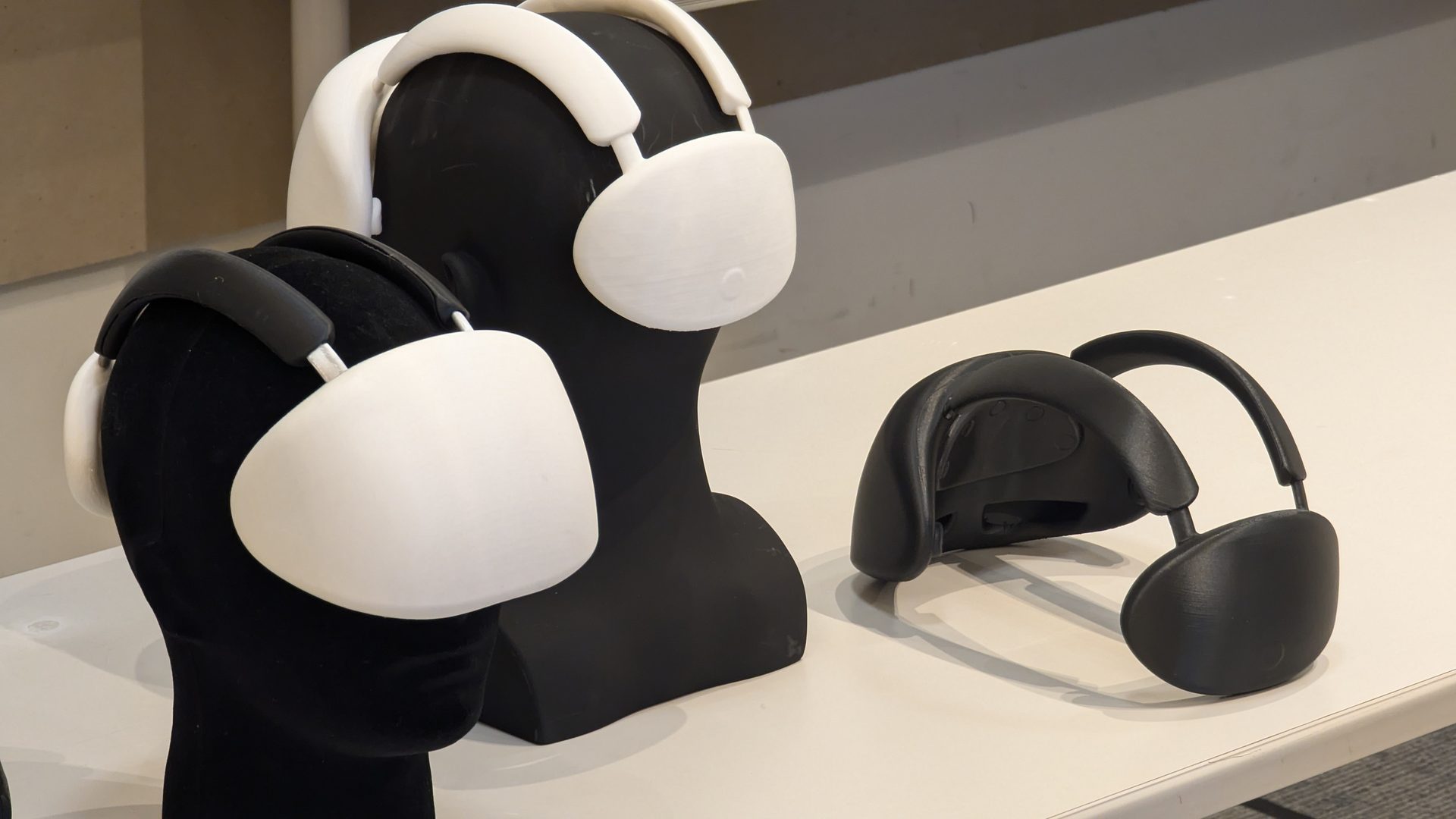
ABOVE: Images from Mortazavi's project, SynTec
Lessons Beyond the Classroom
The development process taught both students lessons that extended beyond any single project.
One of the biggest takeaways for Mortazavi involved the importance of interdisciplinary collaboration.
"Another lesson was that for medical design projects that involve electronic components, collaboration with individuals from more technical fields is extremely important," he said. "These collaborations can help turn a strong concept into a more technically validated and realistic product."
He also gained a new appreciation for conceptual thinking and the value of exploring ambitious ideas that may not yet be fully realized.
Narcisse's lessons centered on systems thinking and user-centered design.
"I learned the importance of designing experiences as systems rather than isolated products," he said. "Every touchpoint, physical, digital, and environmental impacts how users experience the product as a whole."
Both students also emphasized the importance of iteration, observation, and remaining open to unexpected discoveries throughout the design process.
Recognition for Human-Centered Design
For Mortazavi and Narcisse, the FIT Sport Design Awards represent recognition not only of successful outcomes but also of the research, experimentation, and problem-solving that shaped their work.
"When I received the first notification about winning, it was a pleasant surprise," Mortazavi said. "It definitely feels great to be seen, but most importantly, it is rewarding to know that accessible medical design is being valued within the design, engineering, and sports communities."
For Narcisse, the recognition validates the research, systems thinking, and interdisciplinary design work that shaped the project.
He added, "The award motivates me to continue pushing the intersection of industrial design, UX, and technology-driven innovation in my future work."
The projects may have started with different questions, but they arrived at the same conclusion: effective design is less about the technology itself and more about how people experience it. For Mortazavi and Narcisse, the FIT Sport Design Awards mark the culmination of months of research, prototyping, and refinement, and provide momentum for future work at the intersection of design and emerging technology.